Slab leak FAQ for Little Elm, TX: answers to common questions about slab leak signs, detection, repair, cost, insurance and emergency steps.
Educational information only. The actual repair plan depends on the individual property and diagnosis.
A plumbing leak beneath or within the foundation area of a home.
Common clues include unexplained water use, running-water sounds, warm or damp floors and pressure changes.
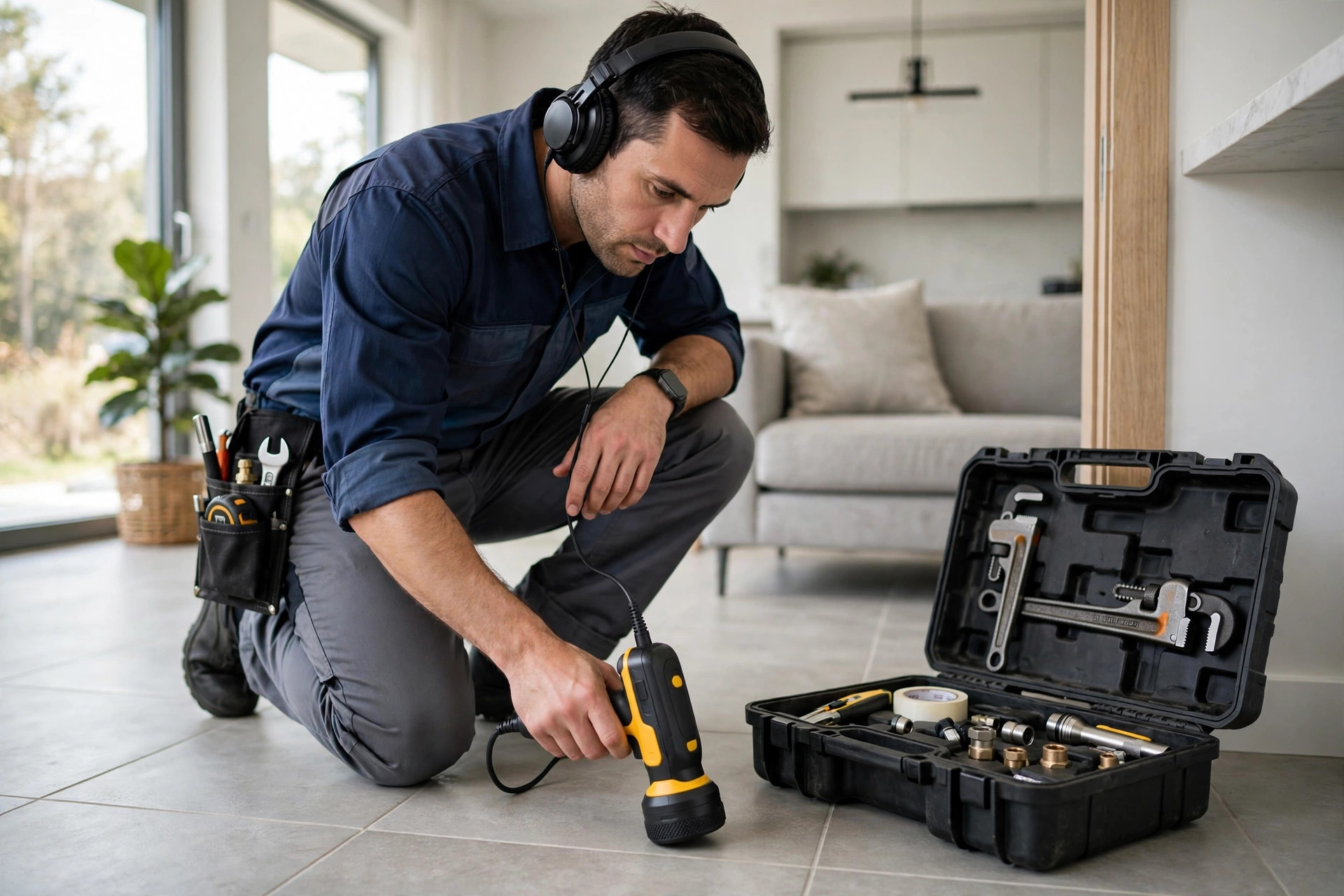
Depending on the symptoms, a professional may combine pressure testing, acoustic listening, thermal observations, electronic tracing and other checks.
Sometimes. Tunneling or rerouting can reduce interior slab access on some properties.
There is no reliable single price for every property; access, diagnosis, repair method and restoration change the total.
Coverage depends on policy wording, cause and which part of the loss is being considered.
If safe and known, reducing water flow at the main shutoff can limit damage. Avoid unsafe electrical areas.
No. Exterior access, depth, utilities, landscaping and site layout affect feasibility.
No. It is one possible approach and should be compared with direct repair and tunneling based on the diagnosis.
Yes. Toilets, irrigation, appliances and fixtures can all increase water use.
DIY demolition can create extra damage and miss the leak location. Diagnosis should generally come first.
Call +1 972-945-2624.
A straightforward visit often takes one to two hours. Complex layouts, deep lines, or several possible leak points can take longer. The time spent pinpointing the leak usually saves more time later by avoiding unnecessary concrete work.
It varies widely. A single direct-access repair can sometimes be finished in a day, while tunneling or rerouting can take several days. Restoration of concrete and finishes adds its own time. A confirmed diagnosis is what allows a realistic schedule.
Tunneling reaches the existing line from outside to protect interior floors, while rerouting abandons the problem line and runs a new path. Neither is always better. The right choice depends on leak location, pipe condition, access, and how much disruption you can accept. Read the full comparison on the repair vs reroute guide.
The biggest variables are detection complexity, the access method, the number of leaks, pipe material and age, and restoration of concrete and finishes. Two identical symptoms can lead to very different invoices, which is why honest sources avoid quoting a single typical price.
Many homeowners policies distinguish sudden and accidental water damage from gradual leaks caused by long-term wear. The failed pipe, the work to reach it, and the resulting damage can each be judged separately. Only your policy wording settles it, so read the exclusions section carefully.
Yes, in some cases. A pinhole leak is a symptom of pipe condition, and fixing one spot does not renew the whole line. If copper corrosion or water pressure is the underlying cause, more leaks can appear later. That is one reason rerouting is sometimes discussed for aging systems.
Note your symptoms: when you first noticed them, your recent water bills, and any sounds or floor changes. Clear access to the water meter and main shutoff if you can. Do not open the slab yourself. See the before the plumber arrives checklist for the full list.
Over time, yes. Water can wash out soil beneath the slab or feed the swell-shrink cycle of expansive clay, and both can lead to movement or cracking. The longer a leak runs, the greater the risk. Early detection protects the structure, not just the plumbing.
Most Little Elm homes have a main shutoff valve near the water meter or where the line enters the house. Turn it clockwise to stop the flow, then open a faucet to drain remaining pressure. If the valve is stuck or you cannot find it, call for guidance instead of forcing it.
You reach the local line at +1 972-945-2624, describe your symptoms in plain words, and get the next step: sometimes a simple check you can do yourself, sometimes a scheduled diagnostic visit. There is no obligation and no pressure to approve a repair on the call.
Call the local phone line for the next diagnostic or service-routing step.