
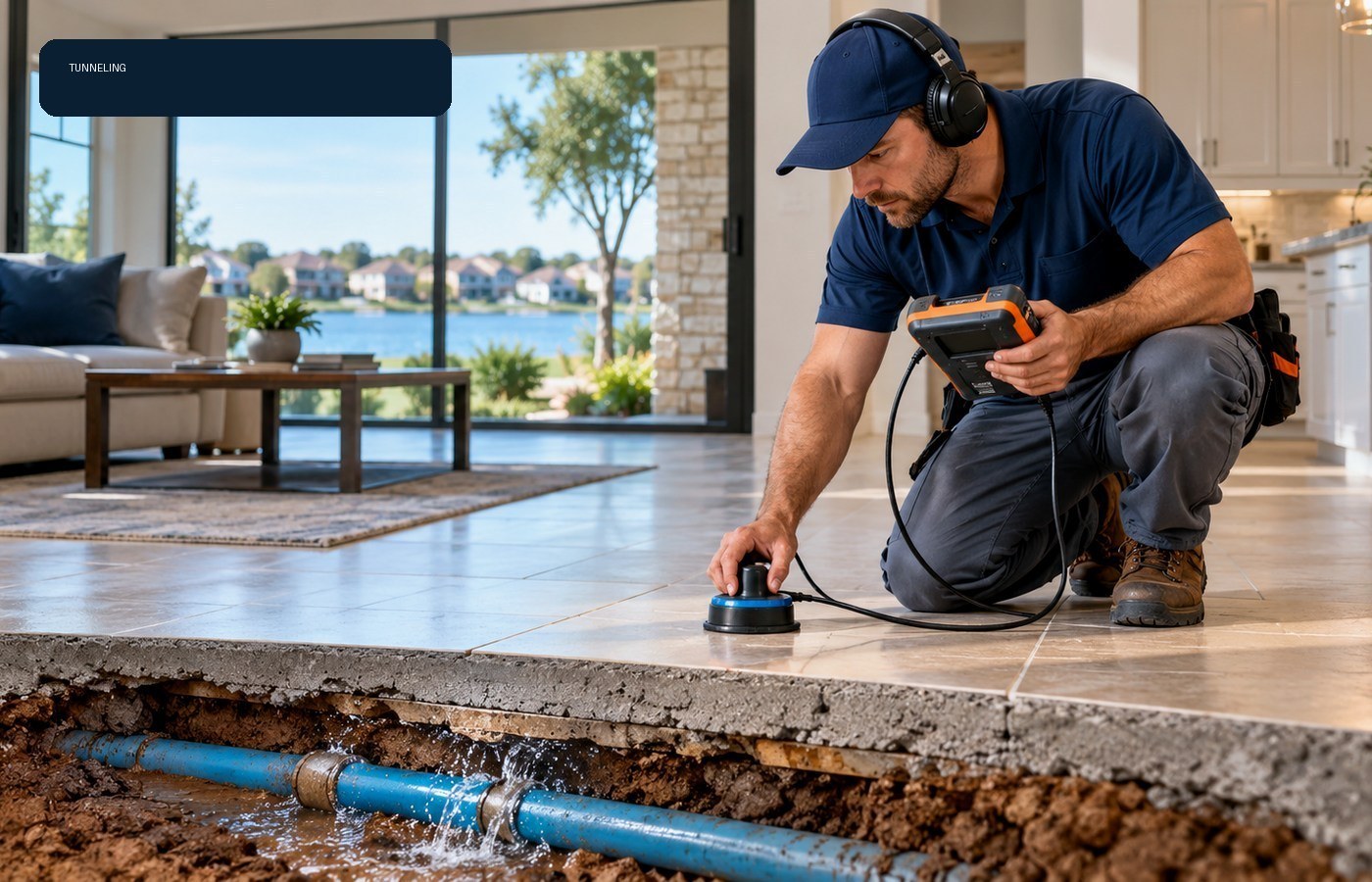
Tunneling reaches a plumbing line from outside the structure where the property makes that approach practical. It can reduce interior slab access, but it does not eliminate excavation, soil handling or restoration.
Before choosing tunneling
- Confirm the likely line location.
- Assess depth and exterior access.
- Consider utilities and landscaping.
- Compare total restoration, not just indoor demolition.
- Test the repair before backfilling.
When it may not fit
Limited exterior access, deep excavation, utilities, hardscape or other site constraints can change the feasibility. A property-specific assessment should decide the method, and rerouting may be the fallback when tunneling is not practical.
What leads to choosing tunneling
Tunneling is considered when the leak location is known, the line runs under a finished interior, and there is workable access from outside the structure. The classic case is a leak beneath tile or wood flooring that the homeowner wants to preserve: reaching the pipe from the side avoids tearing up the finished floor directly above it, which can be the most expensive part of an interior repair.
Site conditions decide whether the idea survives contact with reality. The tunnel needs a sensible entry point, enough clearance from utilities and the foundation itself, and soil that can be excavated and supported safely. Depth matters: a shallow line near the slab edge is a better candidate than a deep line under the center of a large home. Landscaping, patios, and walkways above the tunnel path all factor into the decision. A property-specific assessment should confirm all of this before tunneling is chosen. How the leak point gets located first is covered on the detection page.
Problems tunneling solves
Tunneling does not eliminate excavation, but it moves the disruption to a place where it is often easier to accept:
- Leaks under finished flooring that would be expensive or impossible to match if torn up.
- Interior rooms that need to stay usable while the repair is underway.
- Multiple repair points that can be reached from a single tunnel path.
- Situations where interior concrete cutting would spread dust and disruption through living space.
- Homes where the exterior grade and soil allow a practical digging approach.
- The need to keep interior demolition away from occupants, pets, or home offices.
How tunneling works
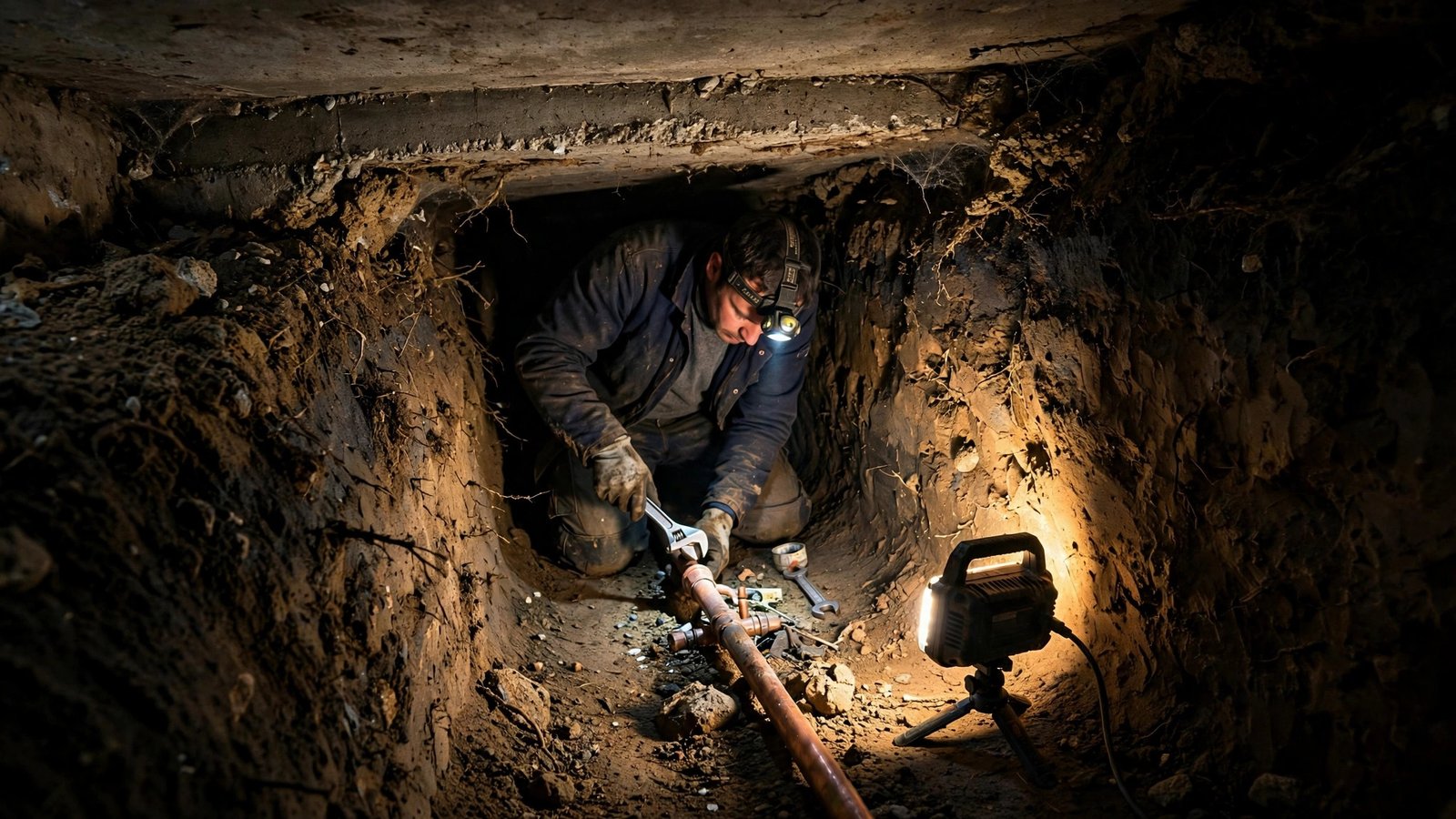
After the leak location is confirmed, an entry point is chosen outside the foundation, usually where digging will disturb the least landscaping or hardscape. The tunnel is excavated toward the target pipe, and the excavation is supported as it advances so the work area stays stable. This is slow, careful work: the tunnel must arrive at the right pipe, not just the right neighborhood, and the crew works in a confined space beneath the structure.
Once the pipe is exposed, the failed section is repaired using the same plumbing methods as an interior repair, and the line is pressure-tested before anything is closed. Only after the test passes is the tunnel backfilled, compacted, and the surface restored. The restoration side is real work too: soil settlement, sod, and landscaping all need attention after the digging is done, and that work should be part of the agreed scope from the start. For the full range of access choices, see under-slab water leak repair.
What affects the approach
Tunnel length and depth are the dominant variables. A short, shallow tunnel to a line near the foundation edge is straightforward; a long, deep tunnel under the center of the home is a much bigger undertaking with more shoring, more soil handling, and more time underground. Soil type changes the work as well: loose or sandy soil needs more support to stay stable, while dense clay is slower to dig through.
Whatever sits above the tunnel path matters. Landscaping, patios, walkways, and buried utility lines can all complicate or rule out a route, which is why utility locations are checked before digging. The number of repairs reachable from one tunnel also changes the math: fixing two or three points from a single excavation spreads the digging cost across more work. Finally, exterior restoration, grading, sod, and hardscape repair, is part of the true project scope and should be named in the plan, not discovered afterward. Cost variables are explained further in the cost guide.
What to mention when you call
Tunneling feasibility depends heavily on the property, so exterior details matter. Describe the outside of the home near the suspected leak: is there open yard, landscaping, a patio, a walkway, or a driveway above the likely tunnel path, since soil and lot layouts vary across Little Elm neighborhoods. Mention any buried utilities, irrigation lines, or drainage you know about in that area.
Inside, note the flooring above the suspected leak and whether matching it matters to you, since preserving finished floors is often the reason tunneling is considered. Share the leak history and any detection findings, including how the location was determined. If a previous repair attempt already opened part of the area, say so, because it changes both the assessment and the plan.
Frequently asked questions
Can pinhole leaks happen more than once?
Yes. Multiple failures can justify broader pipe-condition evaluation.
Does tunneling avoid all interior work?
Not necessarily. It may reduce slab access, but other access or restoration may still be required.
Is rerouting always the best option?
No. The appropriate method depends on diagnosis, access, line condition and the property's needs.
Is tunneling safer for my floors than breaking the slab inside?
It can preserve interior flooring because the work happens outside and below, but the tunnel still passes beneath the structure and the area must be restored carefully. A site assessment should confirm the approach fits your property.
How deep can a tunnel realistically go?
It depends on soil stability, shoring, and safe working conditions at the site. Deeper tunnels need more support and more careful planning, which is why depth is one of the first things evaluated.
What happens to my yard and landscaping?
The entry area is excavated and must be backfilled, compacted, and restored afterward. Sod, plantings, and irrigation in the work zone can be disturbed, so the restoration scope should be agreed in writing before work begins.
Can one tunnel reach more than one leak?
Sometimes. If multiple failures sit along the same accessible path, a single tunnel may reach them all, which can make the excavation cost more efficient than separate interior openings.