
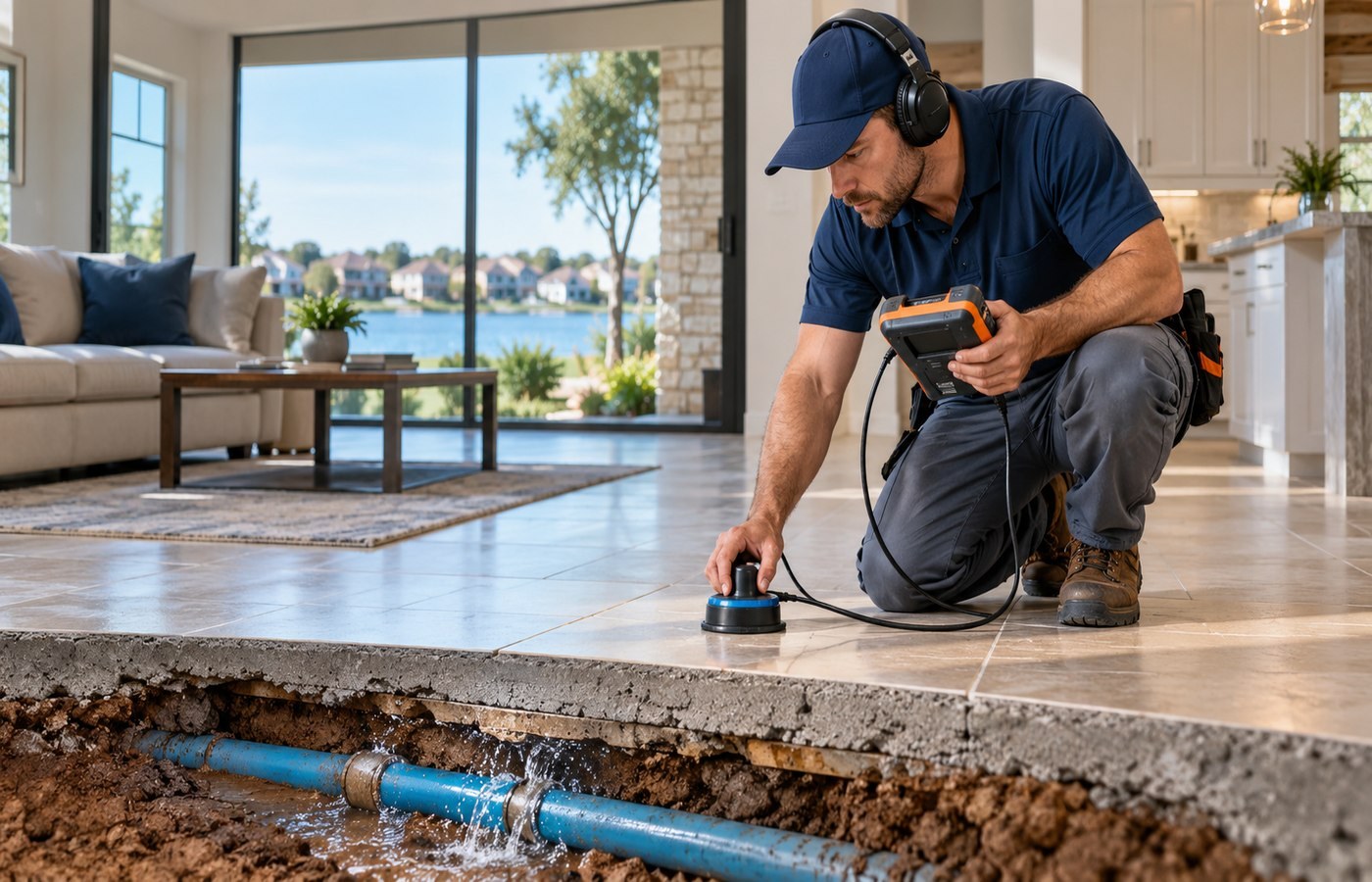
A slab leak is a plumbing leak located beneath or within the foundation area of a property. The practical challenge is to identify the leak accurately, decide how to reach the line, repair the plumbing and then handle any affected concrete or finishes. Because conditions vary from home to home, repair planning should follow diagnosis rather than a one-size-fits-all method. The Little Elm service area lists the neighborhoods covered.
Common signs that deserve a closer look
- Unexplained increases in water usage or a water bill.
- A sound of running water when fixtures are off.
- Localized dampness, staining or unusual floor conditions.
- Changes in water pressure that do not have an obvious fixture cause.
- Recurring moisture near the foundation or floor edge.
How a repair process typically unfolds
First, the suspected leak is investigated. Depending on the plumbing and site, that can involve pressure testing, acoustic listening, thermal observations, electronic tracing or other verification steps. Once the likely location and condition are understood, the repair path can be discussed.
Direct access
The repair area is opened from above or another practical access point, the failed section is addressed, then the area is tested and restored.
Tunneling
When site conditions permit, access from outside the structure can sometimes reduce interior disruption. It still requires careful planning and restoration.
Rerouting
A replacement path can be considered when the original line is difficult to access or a new route better fits the property's plumbing layout.
Repiping
Broader replacement may be evaluated when multiple failures, pipe condition or layout make repeated spot repairs less practical.
Why repair method choice matters
The same symptom can lead to different solutions. A single localized leak and a long deteriorated line are not equivalent problems. The location of the line, pipe material, accessibility, number of leaks, finished surfaces and restoration scope all influence the decision.
What to ask before authorizing work
- How was the leak located and confirmed?
- What repair methods are realistically available?
- What area will need to be opened?
- How will the repair be tested afterward?
- What restoration work is included or excluded?
What causes slab leaks
Slab leaks rarely have a single dramatic cause. More often they are the result of slow processes: corrosion thinning a copper line from the inside, water chemistry that is hard on pipe walls, or high pressure that accelerates wear at fittings and elbows. Age matters, and so does the original installation: a joint made poorly on day one can hold for years before it finally gives way under daily pressure cycles.
The ground itself plays a role in North Texas. Expansive clay soils swell with moisture and shrink in dry spells, and that seasonal movement can stress buried plumbing over time. Abrasion is another quiet cause: a pipe that rubs against concrete, rock, or rebar with every tiny movement eventually wears through at the contact point. Because none of this is visible, the first sign is usually a symptom, not the cause. Those early symptoms are worth learning, and the detection guide explains how each one is investigated.
Problems slab leak repair solves
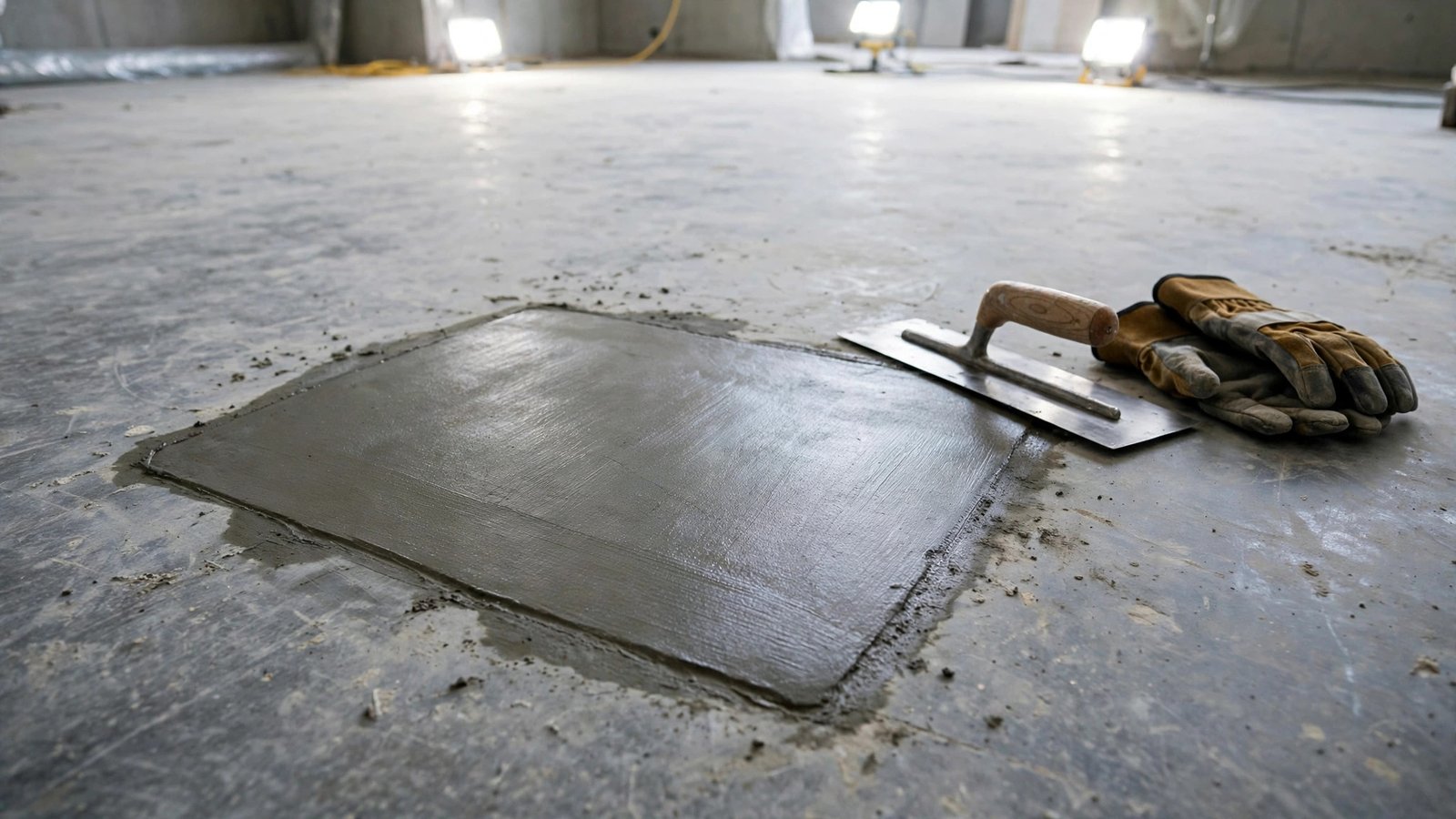
Repair is not just about stopping a drip. A proper repair resolves the whole chain of consequences a hidden leak creates:
- Active water loss that continues whether anyone is using water or not.
- Unexplained bill increases traced to water escaping underground.
- Moisture damaging flooring, baseboards, and lower wall sections.
- Musty, damp indoor conditions with no visible plumbing source.
- The risk of a small hidden failure growing into a larger property problem over time.
- Ongoing uncertainty about where the water is going and what it is affecting.
How slab leak repair works
Every sound repair follows the same arc: find it, reach it, fix it, prove it, restore it. Detection comes first, using pressure testing, acoustic listening, thermal observation, or electronic tracing to narrow the location. Only then is the access method chosen: direct opening, tunneling from outside, or rerouting around the problem. Choosing the method before the diagnosis is how good money gets spent on the wrong plan.
The repair itself addresses the failed pipe section, and the line is pressure-tested before anything is closed up. That test is the proof the job is done, not the patching that follows it. Restoration, concrete, flooring, and finishes, completes the project according to the agreed scope. The tradeoffs between methods are compared in detail on the repair versus reroute page.
What affects the slab leak repair approach in Little Elm, TX
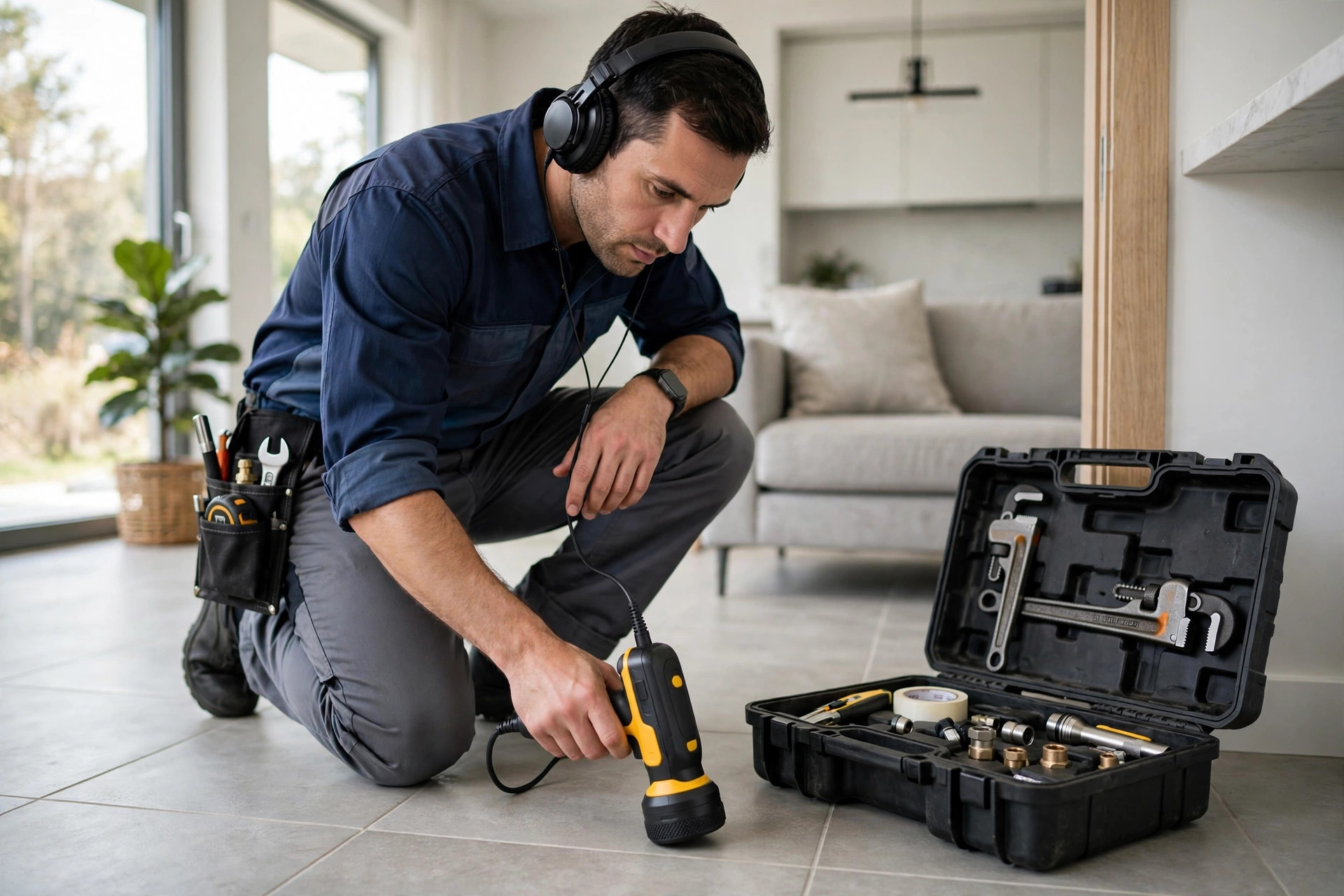
The diagnosis drives everything: the leak's location, the pipe material and condition, and whether there is one failure or several. A single pinhole near an accessible edge is a contained job; multiple failures across a deteriorated line point toward rerouting or broader replacement rather than another isolated patch.
The property shapes the rest. Finished flooring, the depth of the line, exterior access for tunneling, and the home's layout all push the plan in one direction or another. Restoration scope is the part most often underestimated: opening concrete is only half the job if tile, wood, or carpet must be repaired afterward. A written plan should name the detection findings, the access method, the testing step, and exactly what restoration is included. For how these factors show up in pricing, see the cost guide.
Frequently asked questions
Can a slab leak be repaired without breaking concrete?
Sometimes. Tunneling or rerouting may reduce interior access, but feasibility depends on the line, structure, property layout and repair plan.
How serious is a slab leak?
A hidden leak can waste water and create moisture-related property damage. The urgency depends on whether water is actively escaping and how much damage is occurring.
Should I shut off my water?
If you have an active leak and can safely identify the main shutoff, reducing water flow may limit damage. If the situation is unsafe, contact an appropriate professional.
How is a slab leak found?
Investigations may combine pressure testing, acoustic detection, thermal observations, electronic tracing and other verification steps depending on the suspected leak.
How long does repair take?
Timing depends on detection, access, repair method, restoration and unexpected site conditions. A precise timeline should be based on the diagnosis.
Will I need to leave my home during the repair?
Usually not. Most slab leak repairs are completed with the home occupied, though the work area itself will be disrupted and water may be off for portions of the job. Ask what to expect day by day before work starts.
Will repairing the leak fix my high water bill?
Stopping the leak stops the continuous loss that inflated the bill, so usage should return to normal patterns afterward. Past overcharges are a separate matter between you and your water provider.
What if the leak comes back in the same line?
A repeat failure in the same line suggests the pipe is deteriorating rather than suffering isolated bad luck. That is the point where rerouting or broader replacement is usually compared against another spot repair.
How do I choose between repairing and rerouting?
The decision follows the diagnosis: one localized defect with workable access favors repair, while repeated failures, poor access, or line-wide deterioration favor rerouting. The comparison page walks through the tradeoffs.