
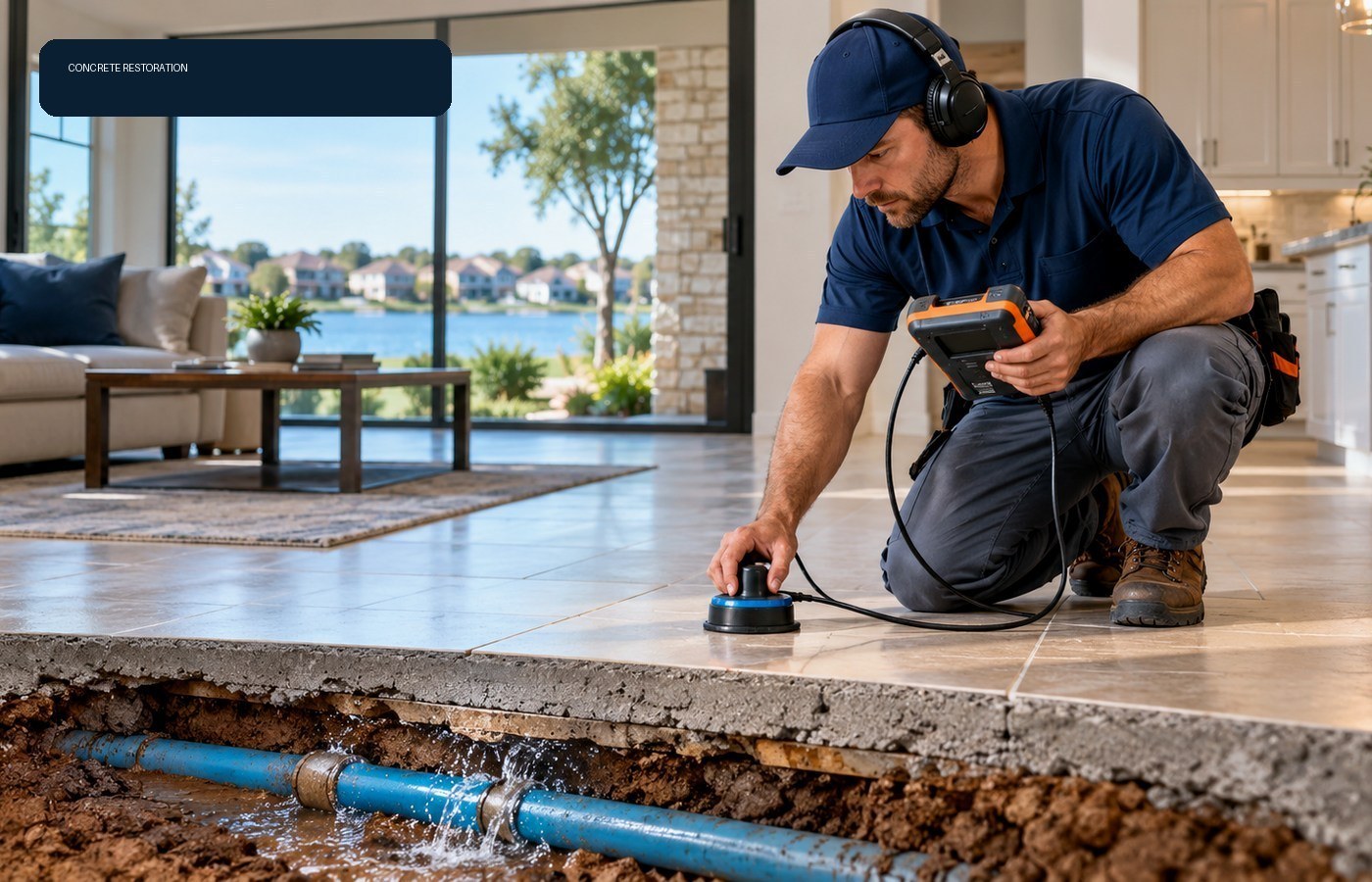
There is no responsible single “Little Elm slab leak price” that applies to every home. The final cost can change based on the leak location, detection complexity, pipe condition, access method, number of affected sections and restoration requirements. A useful cost guide therefore explains what drives the quote instead of publishing an unsupported average. The Little Elm service area lists the neighborhoods covered.
The major cost buckets
1. Detection and diagnosis
Finding the suspected leak area can require testing, listening, tracing or other diagnostics. A difficult-to-isolate leak can take more investigative work.
2. Access
The path to the pipe matters. Interior access can involve flooring and concrete; exterior access may involve excavation and soil handling.
3. Plumbing repair
Pipe material, fitting condition, number of failures and the chosen repair method all affect the plumbing portion.
4. Restoration
Concrete patching, flooring replacement or other finish work can be a separate scope from the plumbing repair itself.
Why direct repair, tunneling and rerouting can price differently
| Approach | Access idea | Cost drivers | Disruption |
|---|---|---|---|
| Direct access | Open the area near the leak. | Depth, finish, concrete, repair and restoration. | Localized interior disruption. |
| Tunneling | Reach the line from outside where feasible. | Excavation depth, soil, access and restoration. | Can reduce interior opening but adds exterior work. |
| Rerouting | Create a different pipe route. | New path, wall/ceiling access, materials and connections. | Varies by new route and finish conditions. |
| Repiping | Replace a broader section/system. | Home size, layout, pipe condition and access. | Broader scope than a single spot repair. |
Questions that make a quote more useful
- Does the price include detection?
- What access method is being proposed?
- Is concrete cutting or excavation included?
- What testing is done after the repair?
- What restoration is included?
- What happens if a second leak is found?
Insurance and cost are related, but not identical
Insurance may treat the failed plumbing, access/tear-out and resulting water damage differently. Your policy language controls. Read the dedicated Texas slab leak insurance guide before assuming any specific item will be covered.
What causes costs to rise
Quotes climb when the job gets harder to define. A leak that is difficult to isolate needs more diagnostic time before anyone can price the repair responsibly. Multiple suspected failures multiply the access work. Deep lines, lines under the center of the home, and lines beneath expensive finishes all add labor and restoration to the scope, and each of those factors compounds the others.
Surprises mid-project are the other cost driver. A second leak found after the first repair, deteriorated pipe discovered once the slab is open, or restoration that turns out to be more involved than expected can all change the final number. This is why the questions-to-ask list above matters: a quote that names its assumptions is easier to compare than one that hides them. The detection guide explains the investigation step that keeps the scope honest.
Problems this cost guide solves
Without a framework, every quote looks like a bare number. This guide exists to fix that:
- Comparing quotes that use different access methods and different scopes.
- Spotting a low quote that quietly excludes detection or restoration.
- Understanding why two honest contractors can price the same symptom differently.
- Planning a realistic budget instead of reacting to the first number you hear.
- Talking to your insurer with a clear breakdown of plumbing work versus resulting damage.
- Knowing which questions turn a vague estimate into a comparable, written scope.
How to get a useful quote
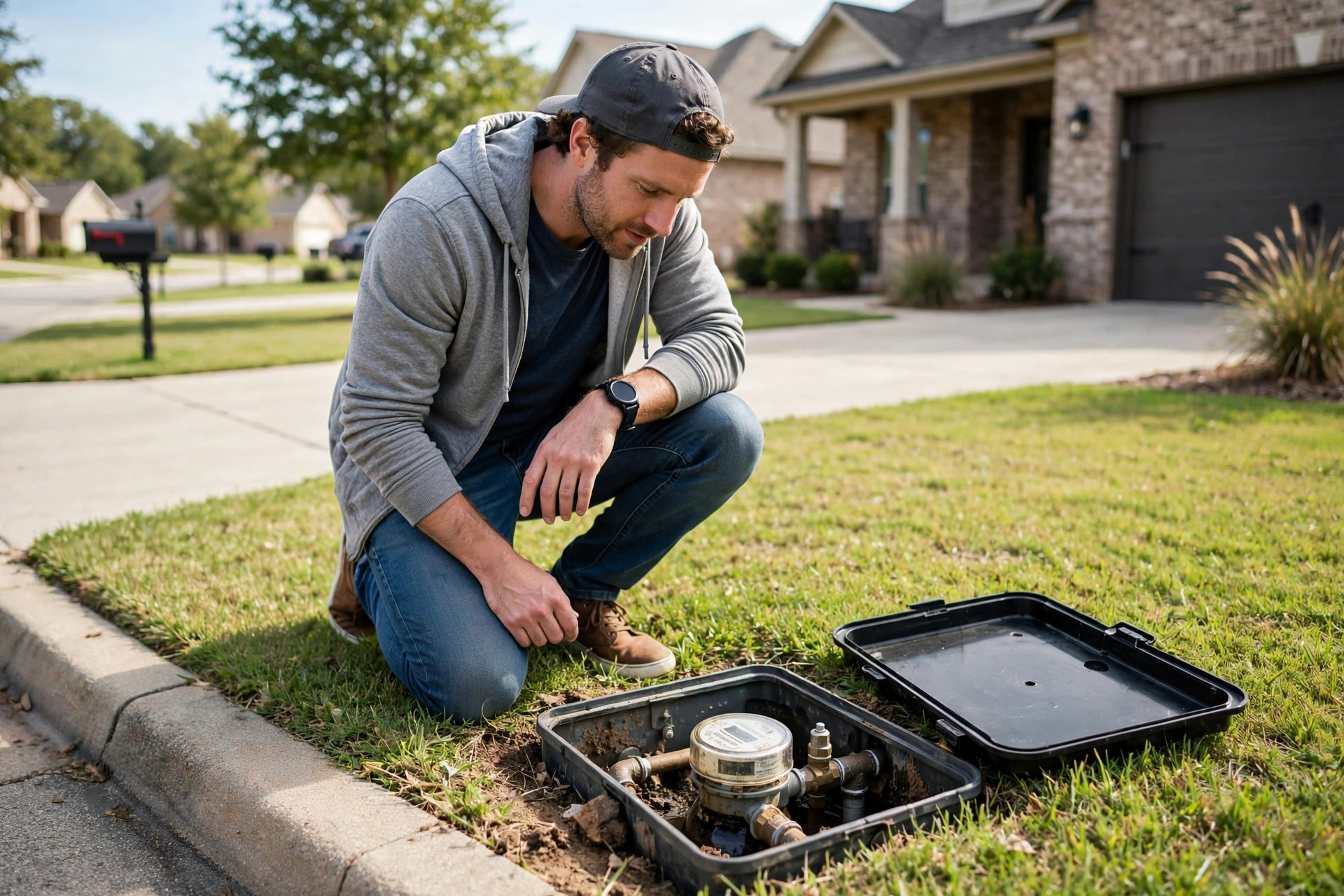
Start with documentation: note the symptoms, photograph visible moisture, and observe the meter with fixtures off. Then get the leak properly located. A quote written against a confirmed location is fundamentally more reliable than one written against a guess, because the access method, and therefore much of the cost, follows the location.
Ask every bidder the same scope questions: what access method is proposed, what testing happens after the repair, what restoration is included, and what happens if a second leak appears. Compare the answers, not just the totals. A detailed scope that names inclusions and exclusions is worth more than a low number with vague terms. For the method tradeoffs behind those quotes, read repair versus reroute.

Variables that change a slab leak repair quote in Little Elm, TX
Detection complexity, access method, pipe material and condition, the number of failures, and restoration scope are the levers. Each one moves independently: a simple detection with difficult restoration, or a hard detection with simple access, produces very different totals. Position within the property matters too, since a line near the slab edge is cheaper to reach than one under the middle of the home.
What the quote leaves out is a variable of its own. Detection, testing, concrete patching, flooring, and finish work can each be included or excluded, and exclusions are where budget surprises hide. Get the scope in writing with each line item named, and make sure change procedures are explained before work begins. If insurance may be involved, the Texas insurance guide explains which parts of the work insurers typically evaluate separately.
Frequently asked questions
What is the average cost of slab leak repair in Little Elm?
An honest local average cannot be stated without a defined sample, date and scope. Leak location, access, repair method and restoration can change the total substantially.
Is tunneling cheaper than breaking the floor?
Not automatically. Tunneling trades interior access for excavation and soil work. The right comparison depends on the property and repair scope.
Does leak detection cost extra?
It may be separately priced or bundled, depending on the service provider and scope. Ask what diagnostic work is included before approving repairs.
Does insurance pay for slab leak repair?
Coverage depends on the policy and cause. The failed plumbing itself may be treated differently from access or resulting water damage.
Why can the quote change after opening the slab?
Visible conditions may differ from what a non-invasive investigation can establish. Unexpected pipe damage, access conditions or additional failures can change the scope.
Why do slab leak quotes vary so much?
Because the scope varies. Detection method, access approach, pipe condition, number of leaks, and restoration inclusion all change the work, so two quotes for the same symptom can describe genuinely different projects.
Should detection be priced separately?
It often is, and that can be reasonable: detection is diagnostic work that may happen before any repair is authorized. What matters is knowing whether the quote includes it or bills it separately.
Is the cheapest quote the best value?
Not necessarily. Compare scopes line by line. A higher quote that includes testing and restoration can cost less in total than a low quote that leaves those as surprises.
What happens if the scope changes mid-job?
Ask before authorizing work. A clear agreement should explain how additional findings, like a second leak, are priced and approved so you are not presented with a surprise at the end.