
Texas homeowners insurance does not produce one universal yes-or-no answer for every slab leak. Policy wording, the cause of loss and the distinction between the failed plumbing, access work and resulting water damage all matter. The Texas Department of Insurance publishes information about endorsements that can provide slab/foundation or water-damage coverage in some policies, which is why policy-specific review matters.
Insurance coverage is determined by the policy and facts of the loss. This page is educational information, not a coverage determination or legal advice.
Think about a slab leak in separate parts
The failed pipe
The plumbing component that leaked may be treated differently from the surrounding property damage or access work.
Reaching the pipe
Some policies or endorsements address tear-out/access or alternate rerouting in specific situations. Read the actual language.
What the water damaged
Flooring, drywall, cabinets or personal property may be evaluated separately depending on the loss and policy.
Texas policy language can include endorsements
The Texas Department of Insurance describes examples of endorsements for slab or foundation damage and water damage. Those examples are not a promise that your policy contains them. Check your declarations, endorsements and exclusions or speak with your insurer.
Texas Department of Insurance home insurance guide and related TDI guidance are useful starting points. The Office of Public Insurance Counsel also explains that extra coverage can be available for foundation or slab damage.
Document the situation before opening the structure when practical
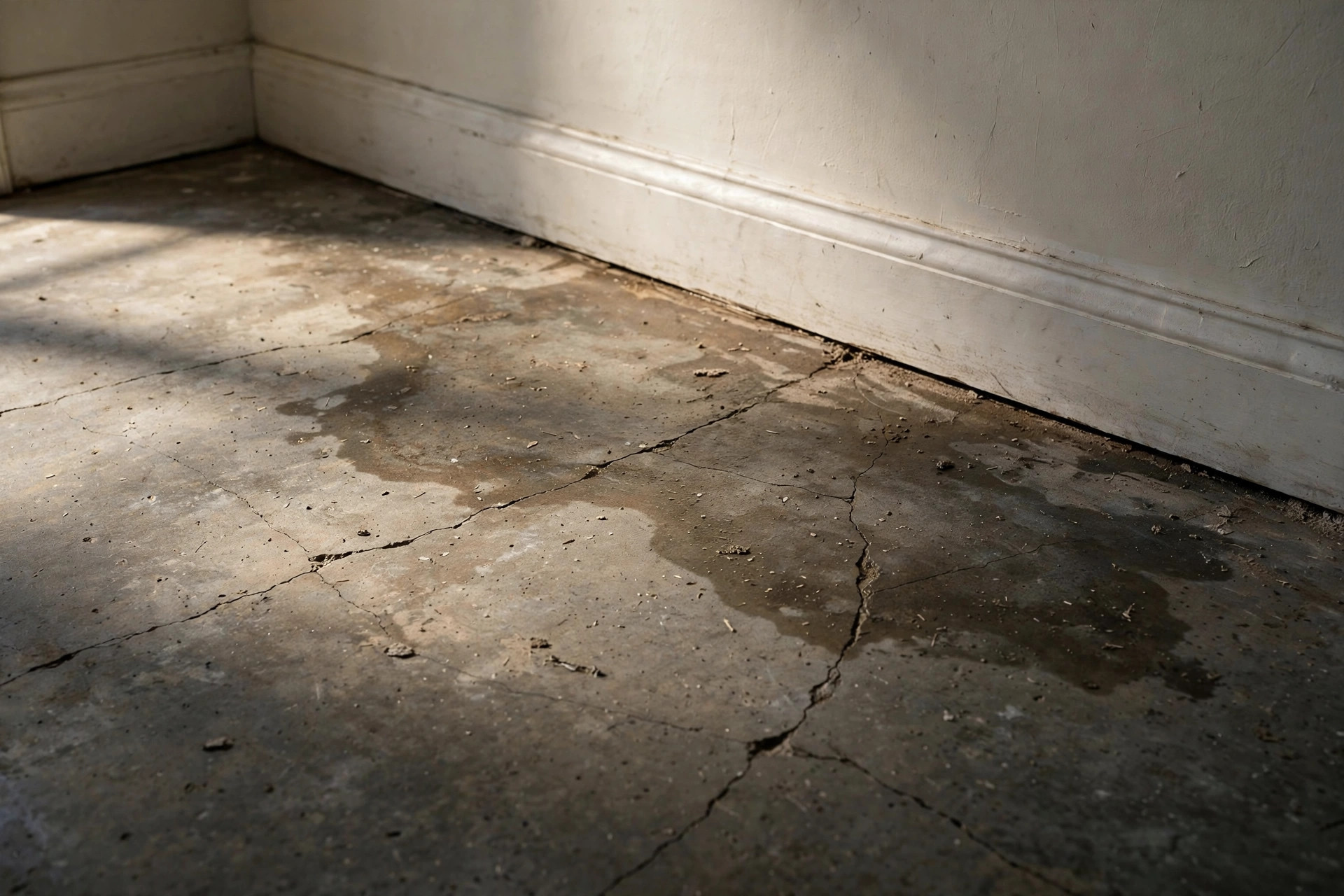
- Photograph visible moisture and affected finishes.
- Keep water bills or meter observations that show unusual consumption.
- Document the suspected leak location and diagnostic findings.
- Ask for written descriptions of the repair and access work.
- Keep receipts and reports tied to mitigation or restoration.
Questions to ask your insurer
- Is the failed plumbing itself covered?
- Is the cost to access the plumbing covered?
- Is resulting water damage covered?
- Does my policy contain a slab/foundation endorsement?
- Do you need photos, reports or an inspection before repairs?
What leads to an insurance question
Most homeowners think about insurance only after the damage is visible: a warped floor, a stained wall base, or a plumber's report naming an under-slab leak. The urgent question is whether the policy helps with any of it, and the honest answer is that it depends on the policy language and the facts of the loss. Sudden, accidental water damage is treated differently from long-term seepage in many policies, so how the loss is characterized matters.
Texas adds its own layer. The Texas Department of Insurance describes endorsements that can cover slab or foundation damage and water damage in some policies, but those are optional additions, not automatic coverage. Whether your policy includes them is a question for your declarations page, not for assumptions. If you are still weighing repair options, the cost guide breaks the work into parts that insurers often evaluate separately.

Problems this insurance guide solves
Insurance confusion usually comes from treating the claim as one thing. Separating it into parts helps:
- Understanding that the failed pipe, the access work, and the water damage may each be evaluated differently.
- Knowing which documents actually help a claim: photos, meter observations, diagnostic reports, receipts.
- Asking the insurer precise questions instead of hoping for a general yes.
- Avoiding early mistakes, like discarding damaged materials before they are documented.
- Separating the repair decision from the coverage decision so one does not delay the other.
- Keeping mitigation and repair on track while the coverage review runs its course.
How a claim process typically unfolds
Documentation comes first and costs nothing: photograph visible moisture and affected finishes, keep water bills or meter notes that show unusual consumption, and save every diagnostic report and receipt. Then review your own policy, declarations, endorsements, and exclusions, before calling the insurer, so you can ask about specific language rather than speaking in generalities.
The insurer typically assigns an adjuster who evaluates the loss against the policy. Repairs and mitigation often proceed on a separate track from the coverage decision, because waiting can let damage grow while paperwork moves. Keep every receipt tied to mitigation and restoration, get repair descriptions in writing, and keep copies of everything you send. This page is educational background, not legal advice; coverage is decided by your policy and the facts. For what to do in the first hours, see the emergency guidance page.
What affects the slab leak insurance approach in Texas
The deductible sets the floor: smaller losses may not exceed it, which changes whether filing makes sense at all. The cause of loss matters enormously, since sudden pipe failures and long-term leaks are often treated differently under the same policy. Endorsements on your specific policy, including any slab or foundation endorsement, can change the answer for the access work in particular.
Documentation quality is the variable you control. Dated photos, meter readings, professional diagnostic findings, and itemized repair descriptions give the adjuster facts to work with; vague recollections do not. Timing matters too: most policies expect prompt notice and reasonable steps to limit further damage, such as reducing water flow where safe. When in doubt, ask the insurer directly what they need and put the answers in your notes. The Little Elm service area lists the neighborhoods covered.
Frequently asked questions
Does homeowners insurance cover a slab leak in Texas?
It depends on the policy, cause of loss and the specific portion of the claim. Pipe repair, access and resulting damage may be treated differently.
What is a slab or foundation endorsement?
Texas Department of Insurance materials describe endorsements that can provide specific coverage for certain slab or foundation damage. Your policy must be checked for the exact language and limits.
Should I file a claim before the plumber repairs the leak?
That decision depends on the severity, policy requirements and risk of further damage. Ask the insurer what documentation or inspection it needs before opening the structure.
Can insurance pay for rerouting?
Some policy or endorsement wording may address tear-out or alternative rerouting. Coverage is fact-specific and policy-specific.
Is this legal advice?
No. Insurance coverage depends on your policy and facts. For disputes or legal questions, seek advice from the appropriate licensed professional.
Does insurance cover the pipe repair or just the water damage?
It depends on the policy. Many policies distinguish between the failed plumbing itself, the cost to access it, and the damage the water caused, and each part can be treated differently. Read your actual language or ask your insurer.
What is a slab or foundation endorsement?
It is an optional policy addition described in Texas Department of Insurance guidance that can provide coverage for slab or foundation-related damage in some policies. It is not automatic; check whether your policy includes it.
How quickly should I file a claim?
Promptly. Most policies expect timely notice and reasonable mitigation steps, like documenting damage and limiting further water exposure. Delays can complicate a claim, so call once you have basic documentation.
What documentation helps a claim most?
Dated photos of visible damage, water bills or meter notes showing unusual use, written diagnostic findings, itemized repair descriptions, and receipts for mitigation and restoration. Keep copies of everything you submit.