
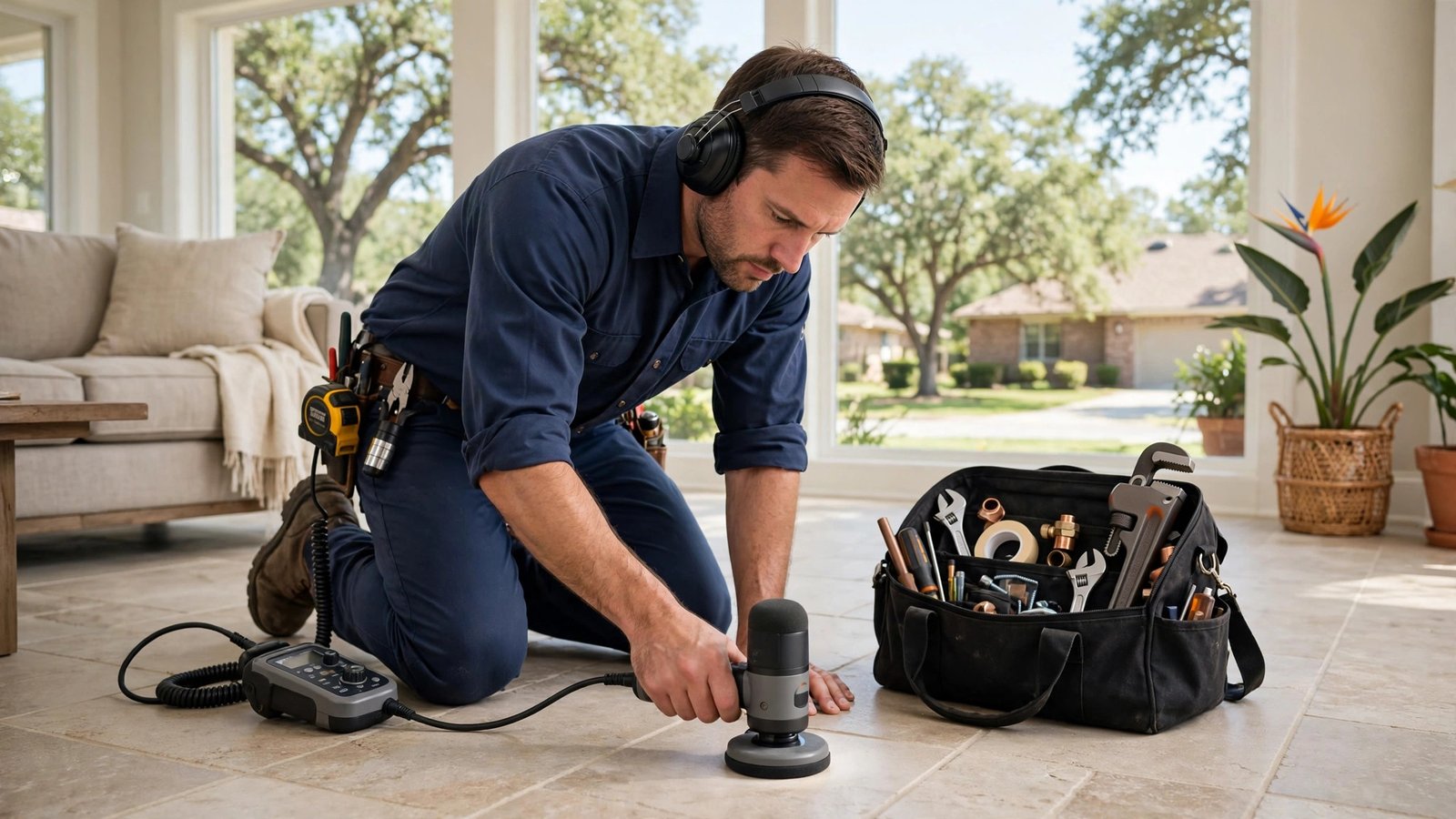
An active under-slab leak can waste water and create rapidly changing conditions. The first priority is to reduce preventable damage while getting the situation assessed. This page is educational; actual emergency availability depends on the service provider's current dispatch capacity. The Little Elm service area lists the neighborhoods covered.
Signs a suspected leak may need prompt attention
Active water loss
Water use continues when normal fixtures are off, or the meter behavior changes unexpectedly.
Visible moisture
Damp flooring, puddling or fast-spreading wet areas are reasons not to ignore the problem.
Pressure change
A sudden pressure change can have multiple causes, but it can be important when combined with other leak clues.
What you can do first
- If it is safe and you know where the main shutoff is, reduce water flow to the property.
- Move valuables or absorbent items away from visible water where safe.
- Photograph affected areas before cleanup or demolition when practical.
- Note unusual water-bill or meter behavior.
- Call for professional assessment before opening the slab yourself.
What not to assume
A wet floor does not automatically prove a slab leak. HVAC condensation, appliance leaks, drainage problems and other plumbing sources can produce similar symptoms. Diagnosis helps avoid spending money on the wrong problem.
What happens after the call?
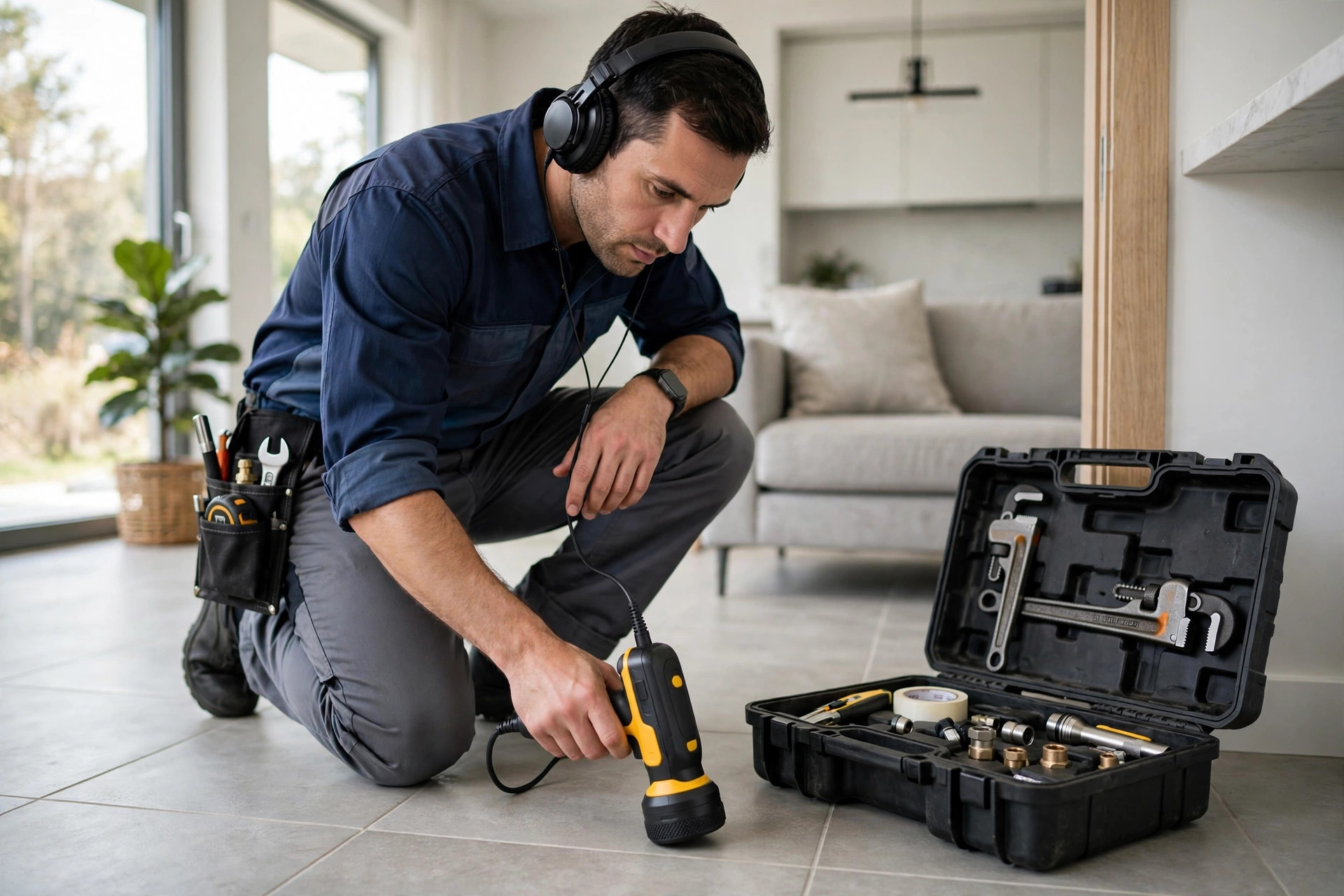
The next step is typically a diagnostic discussion or visit. The investigator may ask where water appears, when the problem started, whether pressure changed and what other plumbing symptoms are present. Detection can then narrow the likely source before repair work begins.
What turns a leak into an emergency
Not every slab leak is an emergency, but some situations should not wait. The clearest is active, high-volume water loss: the meter spins with everything off, or water is visibly spreading across floors faster than towels can manage. Water near electrical outlets, panels, or appliances adds a safety dimension that changes the priority from property protection to personal safety.
Structural warning signs also escalate the situation: buckling flooring, water seeping up through slab cracks, or saturation spreading faster than you can contain it. If you cannot find or safely reach the main shutoff, the inability to stop the flow is itself part of the emergency. When the situation is stable enough to plan rather than react, the detection guide explains the investigation that follows.
Problems fast action solves
In the first hours, the goal is not a finished repair. It is stopping the losses that compound with time:
- Ongoing water waste that keeps adding to the bill every hour the leak runs.
- Moisture spreading into flooring, walls, and belongings that are still dry.
- Damp conditions settling in that become harder and more expensive to remediate later.
- Lost documentation: photos and notes taken early are far more useful than memories later.
- Delayed diagnosis, since the assessment can only start once someone is called.
- Safety risks where water meets electrical systems or creates slip hazards.
How emergency slab leak repair works in Little Elm, TX
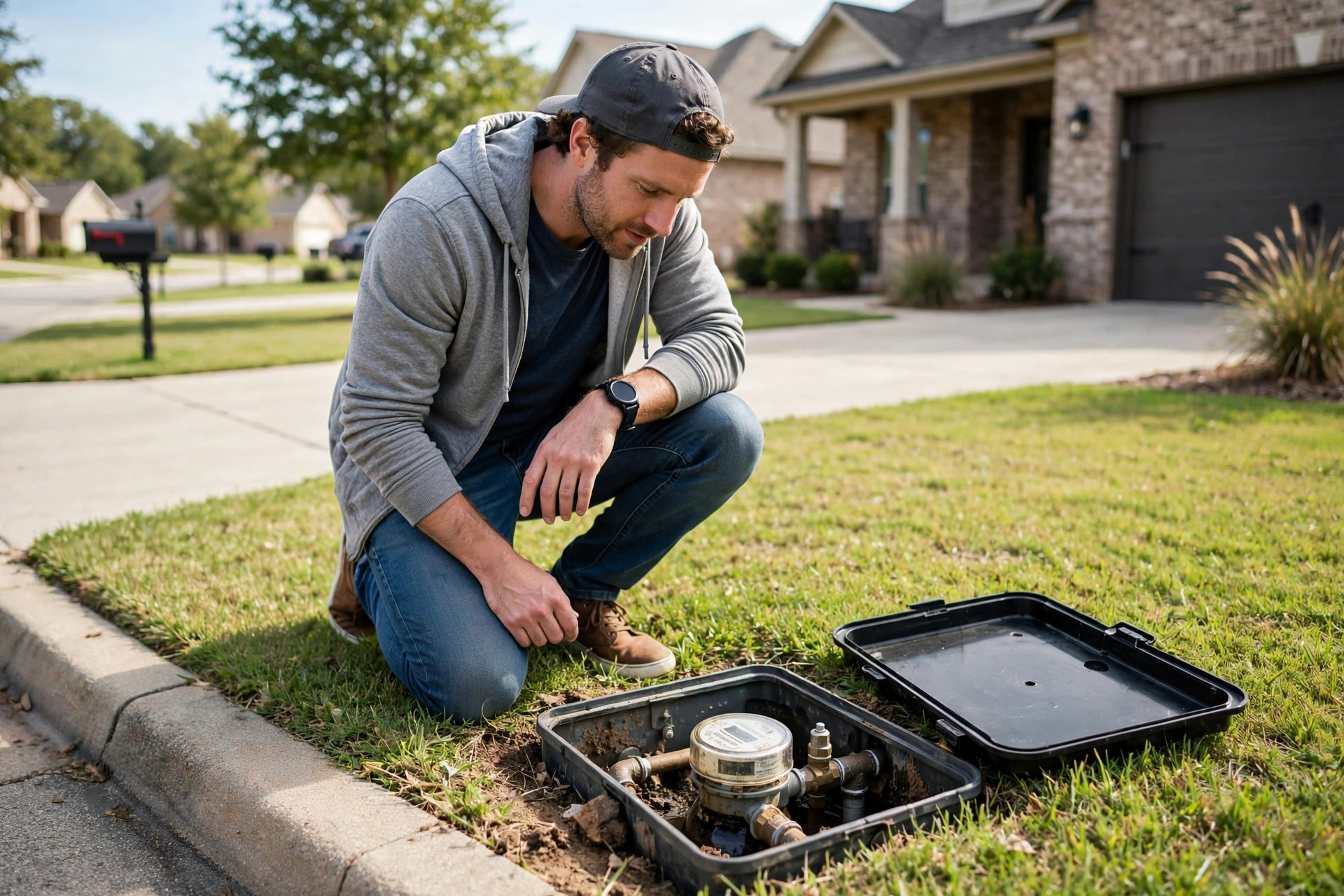
The first step is reducing flow if you can do it safely: the main shutoff, usually near the meter or where the water line enters the home, stops water to the whole property. Move valuables and absorbent items away from visible water, and photograph affected areas before cleanup when it is practical to do so. Note what you observe: where the water appears, when it started, and whether pressure changed.
When you call, expect triage questions about exactly those observations. The responding professional uses them to judge urgency and plan the visit. Detection then narrows the source before any repair is discussed, because even in a hurry, repairing the wrong place wastes the time you are trying to save. Temporary water control may be arranged while the full plan is developed. For how repair methods compare once the source is known, see repair versus reroute.
What affects the approach
Severity sets the pace. A slow seep discovered on a weekday can be scheduled methodically; water spreading across the living room cannot wait for a convenient slot. Whether the main shutoff is accessible and actually working changes what you can do before help arrives, which is worth checking before you ever need it. The home's layout matters too: water traveling under flooring can surface far from the actual leak.
What the investigation finds shapes everything after. A single accessible failure may move quickly to repair; an ambiguous case still needs proper detection first, because haste without a location risks the wrong fix. Restoration scope, especially flooring and finishes affected by the water, is part of the plan from the start rather than an afterthought. Service availability varies by provider and by hour, so confirm current dispatch capacity when you call rather than assuming it.
Frequently asked questions
Should I turn off the main water?
If there is active water loss and you can safely access the shutoff, reducing flow may limit damage. Do not put yourself at risk to reach it.
Do you offer 24/7 emergency service?
Availability must be confirmed on the current phone line. This site does not publish an unverified 24/7 claim.
Can I keep using the water?
If you suspect an active under-slab leak, continued use may increase water loss. Ask the responding professional what is reasonable for your situation.
Can a slab leak damage a foundation?
A persistent leak can create moisture around the foundation area. The actual structural impact depends on site and building conditions and requires appropriate evaluation.
What should I photograph?
Photograph visible moisture, flooring changes, staining and any affected finishes without disturbing unsafe areas.
Who should I call first, a plumber or my insurer?
If water is actively causing damage, getting the flow stopped and assessed usually comes first; documentation for the insurer happens alongside. You can notify the insurer the same day without waiting for the full diagnosis.
What if water is near electrical outlets?
Treat it as a safety issue first. Avoid the wet area, do not touch electrical devices with wet hands or while standing in water, and call for professional help rather than investigating yourself.
Can a slab leak emergency wait until morning?
It depends on severity. If you can safely shut off the water and the situation is stable, waiting may be reasonable; if water is still flowing or spreading, sooner is better. When in doubt, call and describe what you see.
What should I tell the dispatcher when I call?
Where the water appears, when it started, what the meter does with fixtures off, whether pressure changed, and whether you were able to shut off the water. These details shape the response you get.