
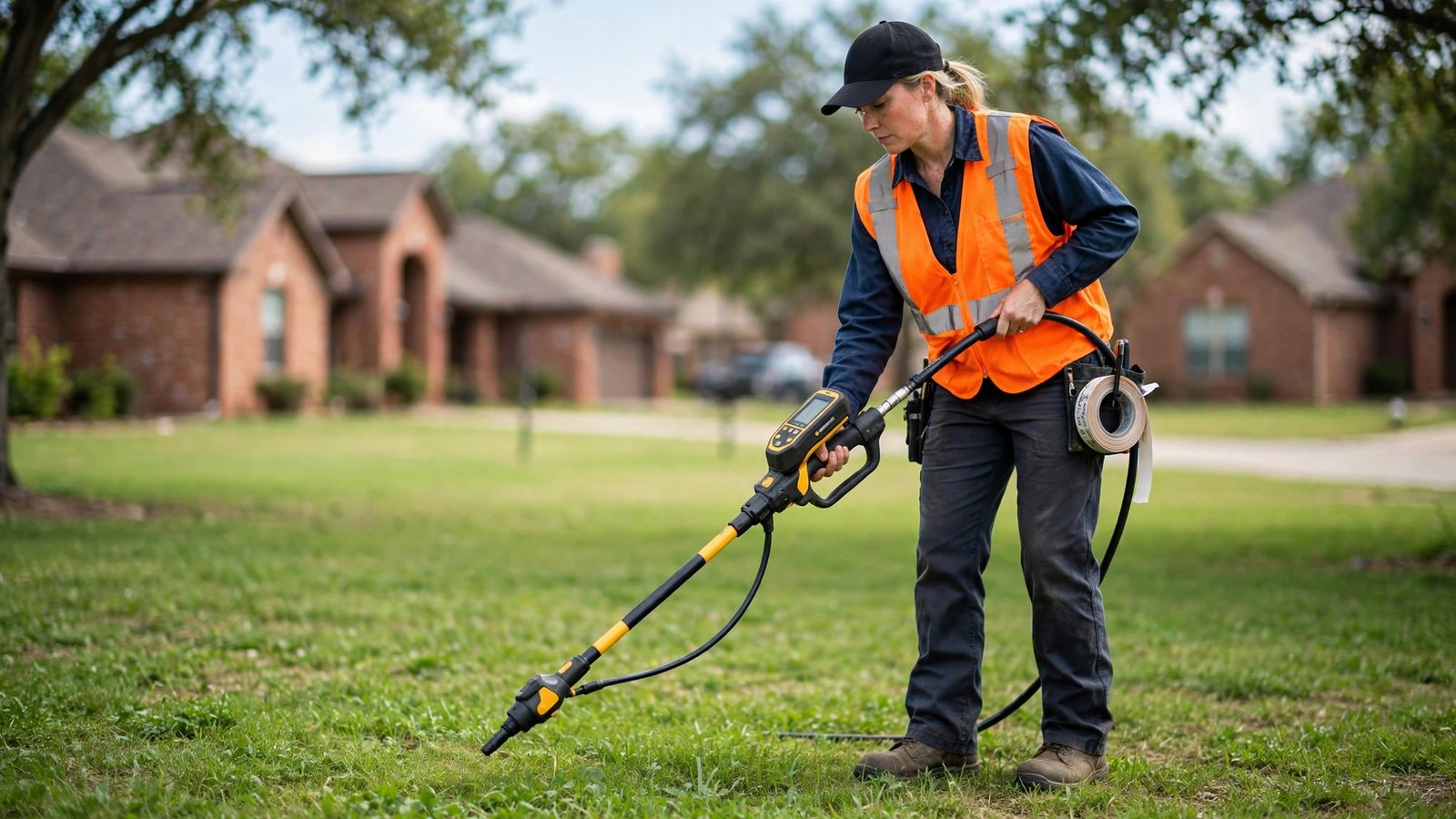
Slab leak detection in Little Elm, TX combines clues and testing to show how a slab leak is detected. Depending on the suspected problem, an investigation may include pressure testing, acoustic listening, thermal observations, electronic tracing and moisture checks.
Pressure testing
Testing can indicate whether a plumbing section is holding pressure. It does not always pinpoint the exact defect by itself.
Acoustic detection
Listening equipment can identify sound patterns associated with water escaping, subject to building noise and pipe conditions.
Thermal and electronic tools
Temperature changes or electronic tracing can add information about a suspected line or area. No single tool proves every leak.
Step one: proving water is escaping
Detection starts with confirming that water is actually leaving the system. With every fixture and appliance off, the water meter should sit still. A moving meter proves flow that has no legitimate destination. The main shutoff valve can then narrow things down: if the sound of running water stops when the valve closes, the problem is on the house side of the valve.
This simple logic is why professionals ask homeowners what the meter did. It separates a supply-side leak from usage, irrigation or appliance issues before any equipment comes out of the truck.
Pressure testing the lines
The core of slab leak detection is pressure testing. The water lines are isolated, usually hot and cold separately, and pressurized with a gauge attached. A line that cannot hold pressure has a breach somewhere along its run. Testing hot and cold separately also tells the technician which line to chase, which narrows the search area considerably.
Drain and sewer lines are tested differently, often with a hydrostatic test that fills the line with water and watches whether the level holds. Supply and drain testing answer different questions, so the right test depends on the symptoms.
Acoustic listening
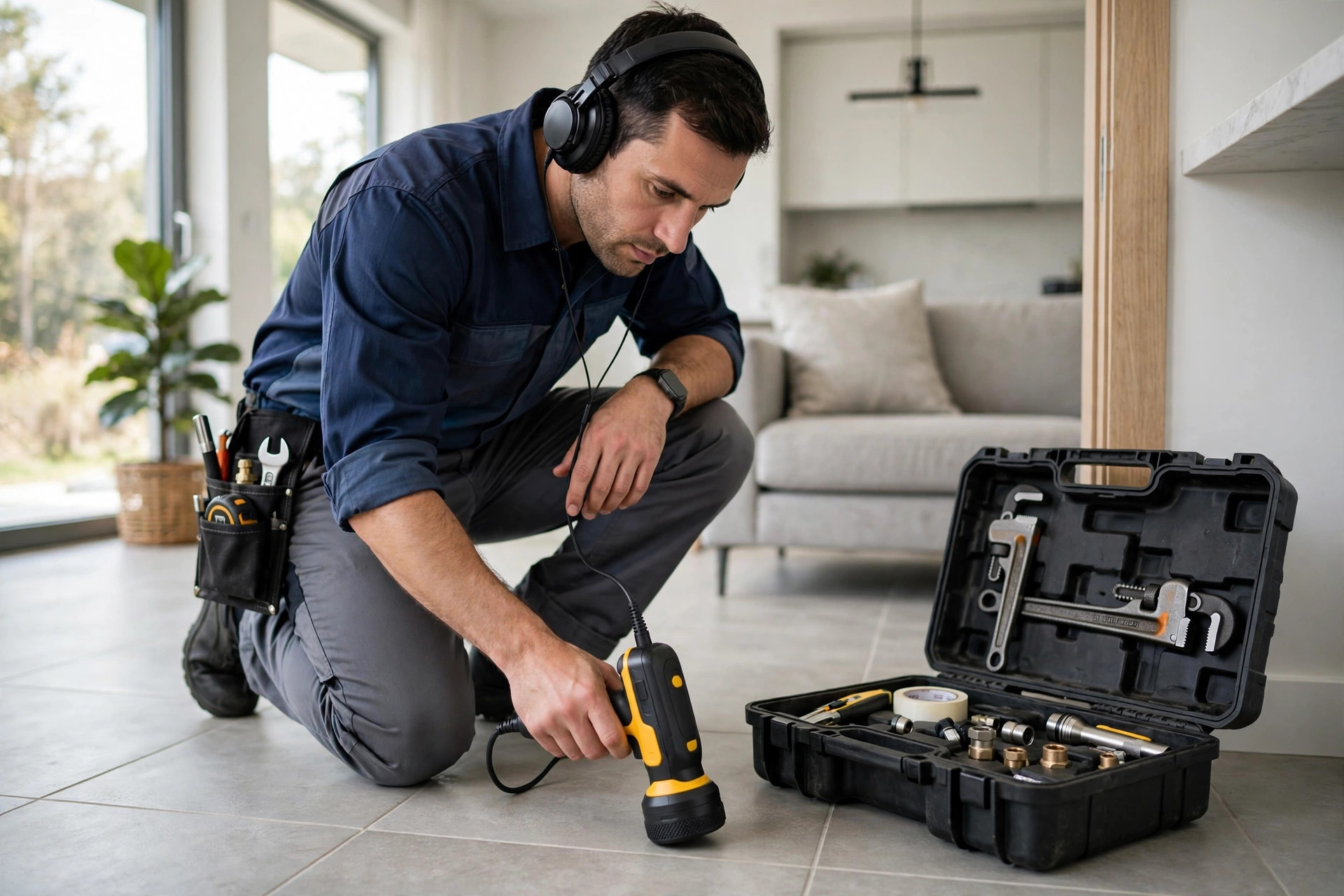
Escaping water makes noise, and sensitive acoustic equipment amplifies it through the slab. A technician moves a ground microphone or listening sensor across the floor, following the pipe path, listening for the distinct hiss or rumble of a pressurized leak. The loudest point usually marks the leak area.
Background noise matters, so this work is often done when the house is quiet. Acoustic listening is a locating tool rather than a repair, but a skilled operator can narrow the dig or tunnel zone to a small area.
Thermal imaging and electronic tracing
For hot-water line leaks, thermal imaging cameras can show a warm patch spreading across the floor above the leak. It works best when the surrounding slab is at a stable temperature, and it locates the symptom area rather than the exact pipe breach.
Electronic line tracing sends a signal through a metallic pipe so a receiver can map the pipe path under the slab. Knowing the route matters because the leak sound is interpreted against where the pipe actually runs. Together, these tools turn a vague symptom into a marked location on the floor.
Putting the slab leak detection evidence together in Little Elm, TX
No single method stands alone. A solid diagnosis combines the meter behavior, pressure test results, acoustic findings and any thermal or tracing data into one conclusion: which line is leaking and approximately where. That conclusion is usually delivered as a marked location and a short report.
This is also the point where repair options enter the picture. Once the leak point is known, the homeowner can compare direct repair, tunneling and rerouting for that specific location. The repair planning that follows detection is far more accurate than any plan made from symptoms alone.
Frequently asked questions
Is slab leak detection destructive?
No. Detection uses pressure gauges, listening equipment, thermal cameras and tracing tools, none of which damage the home. Markings on the floor are temporary. Concrete is only opened later, if the chosen repair method requires it. You can stay in the home during the visit, and the process usually takes a single appointment.
How accurate is acoustic detection?
In experienced hands it is quite good at narrowing the leak to a small area, but it is one piece of evidence among several. Professionals combine it with pressure testing and pipe tracing rather than relying on sound alone. Ask the technician to explain how the findings fit together, so the marked location makes sense to you.
Can I detect a slab leak myself?
You can do the meter test and listen for water sounds, which is useful screening. Pinpointing the leak under concrete takes professional equipment and experience, so confirmation and location are best left to a specialist. Your meter test results and symptom notes are genuinely useful to the professional who takes it from there. EPA WaterSense also publishes household water-efficiency resources with leak-check tips.
How long does detection take?
A typical investigation is a single visit of a few hours, depending on the home size and how many lines need testing. Complex symptoms or multiple problem areas can take longer. Clearing access to the water heater, fixtures and cleanouts before the visit helps keep things on schedule.
What happens after the leak is found?
The technician marks the location and explains the findings. Then repair options are compared for that spot: direct repair through the slab, tunneling from the slab edge, or rerouting the line above the slab. Get each option explained for the specific spot, including what restoration each one requires.
Need help after reading?
Use the phone line to discuss the symptoms at your property and the next diagnostic step.
☎ Call +1 972-945-2624