
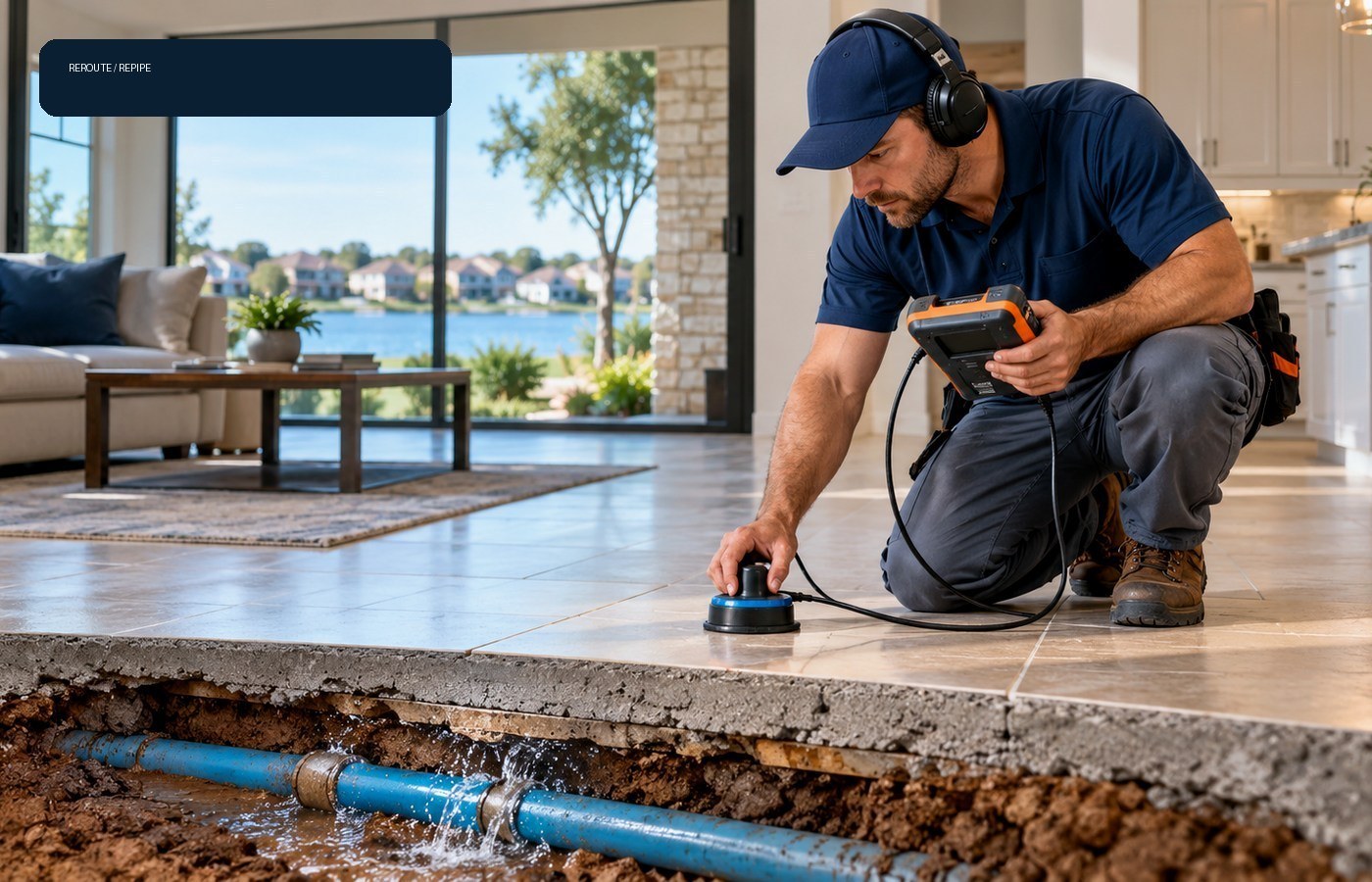
Rerouting creates a new plumbing path that bypasses the original slab-area route. It can be considered when direct access is impractical, repeated failures are a concern or a new route offers a better long-term service path.
Rerouting can shift, not erase, access work
A new route may run through accessible walls, ceilings or other spaces. The amount of finish work depends on the chosen path and the home's construction.
Useful questions
- Why is the existing route being bypassed?
- Where will the new pipe run?
- What finished surfaces will be opened?
- How will the new route be tested?
- How does the restoration scope compare with direct repair or tunneling?
What leads homeowners to consider rerouting
Rerouting usually enters the conversation after the original under-slab route has proven troublesome. The most common trigger is repetition: the same line has leaked more than once, which suggests the pipe itself is deteriorating rather than suffering a single unlucky failure. Patching the same run a second or third time starts to look like a pattern, and a pattern calls for a different strategy than another isolated fix.
Another trigger is access. A line may run beneath expensive tile, hardwood, or a part of the home where opening the slab would mean gutting finished rooms. Remodeling and additions can also force the question: a line that now runs under a new room or a concrete patio is far harder to reach than it was when the home was built. In some layouts the original route was simply a poor design, with long buried runs and many hidden fittings that become likely failure points. When any of these apply, bypassing the old route can be more practical than chasing it through concrete. The detection page explains how the failing line is identified before a new route is drawn.
Problems rerouting solves
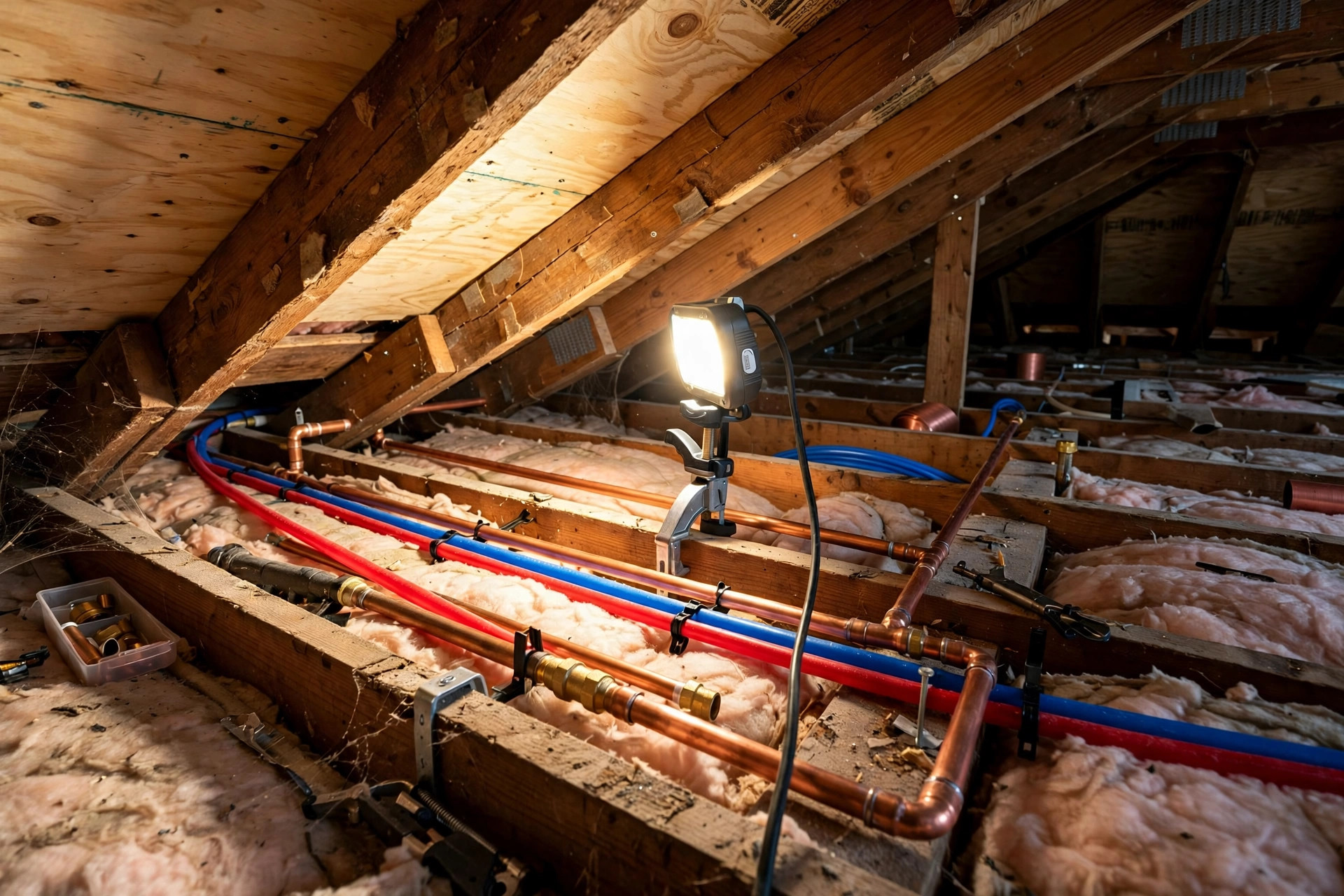
Rerouting trades one kind of access work for another, and that trade is exactly what solves several stubborn problems:
- Repeated leaks on the same under-slab line that keep returning after spot repairs.
- Lines buried under finished interiors where slab access would destroy expensive flooring.
- Plumbing trapped under additions, patios, or hardscaping that cannot be opened practically.
- Deteriorated lines where each repair only fixes the latest weak point, not the next one.
- Layouts where a shorter, more accessible overhead route simply makes better sense.
- Future maintenance headaches, since a visible, reachable line is easier to service than a buried one.
How rerouting works
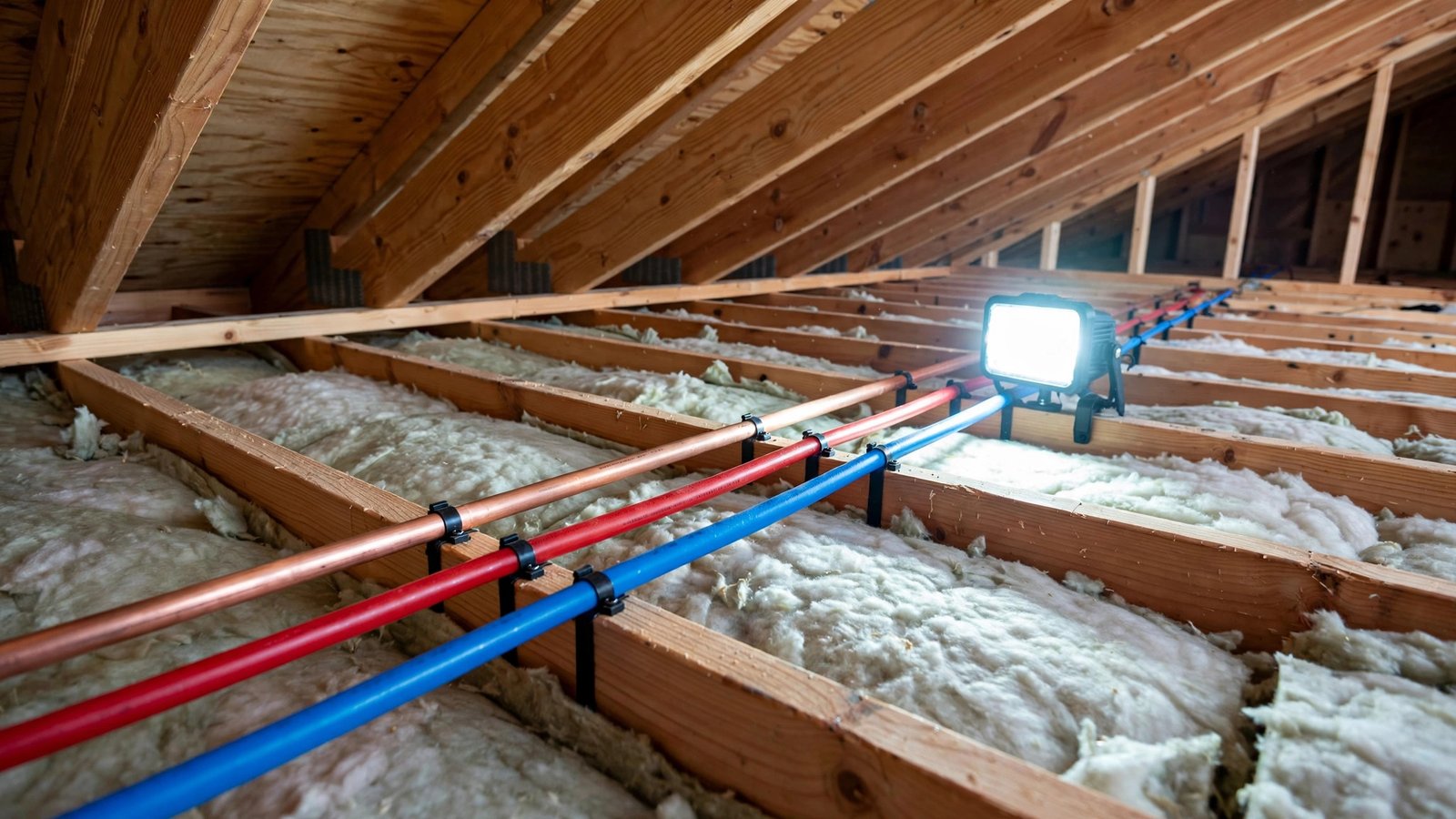
The process starts with a map of the existing plumbing: which line is failing, what it serves, and where it runs. The new route is then designed through accessible spaces, often an attic, interior walls, or a ceiling chase. The design tries to minimize the number of openings in finished surfaces while keeping the run serviceable in the future, because a reroute that cannot be reached later has given up one of its main advantages.
Installation follows the plan: the new line is run, connected to the existing system at both ends, and the old under-slab section is capped or abandoned in place. Pressure testing comes before any patching, because the whole point of rerouting is to leave the problem route behind with confidence. Finish repair, drywall patching, paint touch-up, and similar work close out the project. Because the new line runs where it can be seen and reached, future maintenance is usually simpler. To weigh this path against opening the slab, read repair versus reroute.
What affects the approach
Route length is the primary variable. A short attic run to one bathroom is a contained project; a whole-house reroute across multiple fixtures is a larger one with more openings, more connections, and more finish work. The construction of the home matters too: open attic space is easy to work in, while finished ceilings and multi-story layouts require more openings and more careful patching.
The number of fixtures and connections on the failing line changes the scope, as does the pipe material chosen for the new run. Finish quality drives the restoration side: matching texture and paint in visible living areas takes more care than patching a garage wall. Testing and documentation round out the plan, and a clear written scope should state which openings will be patched and by whom so there is no confusion at the end. Related reading: under-slab water leak repair for the alternative of fixing the line in place.
What to mention when you call
Rerouting discussions go faster with a few facts ready. Describe the leak history: how many failures have occurred, whether they were on the same line, and how each one was repaired. Mention which fixtures the failing line serves, since that determines how the new route would be laid out through the home.
Describe the property too: the number of stories, whether there is accessible attic space, and what finished surfaces sit above the current under-slab route. If a previous contractor already suggested rerouting, say what route they proposed and why. As with any method, the plan should follow a proper diagnosis, so bring any detection reports or pressure-test results you already have.
Frequently asked questions
Can pinhole leaks happen more than once?
Yes. Multiple failures can justify broader pipe-condition evaluation.
Does tunneling avoid all interior work?
Not necessarily. It may reduce slab access, but other access or restoration may still be required.
Is rerouting always the best option?
No. The appropriate method depends on diagnosis, access, line condition and the property's needs.
Does the old pipe stay under the slab?
Usually, yes. The abandoned section is capped at both ends and left in place because removing it would require the very slab demolition the reroute was designed to avoid. Ask for the abandonment to be noted in the job documentation.
Where does the new water line usually run?
Common routes include attics, interior wall cavities, and ceiling chases. The chosen path depends on the home's layout, which fixtures the line serves, and where openings can be patched cleanly afterward.
Does rerouting take longer than a direct repair?
It can. Running a new route through finished spaces involves more planning, more openings, and more finish work than fixing one accessible point. The tradeoff is avoiding repeated slab openings on a failing line.
Can rerouting prevent future slab leaks on that line?
Rerouting removes that particular line from the slab, so the buried section can no longer leak into the foundation area. Other original lines in the home are unaffected, so the overall system condition still matters.