
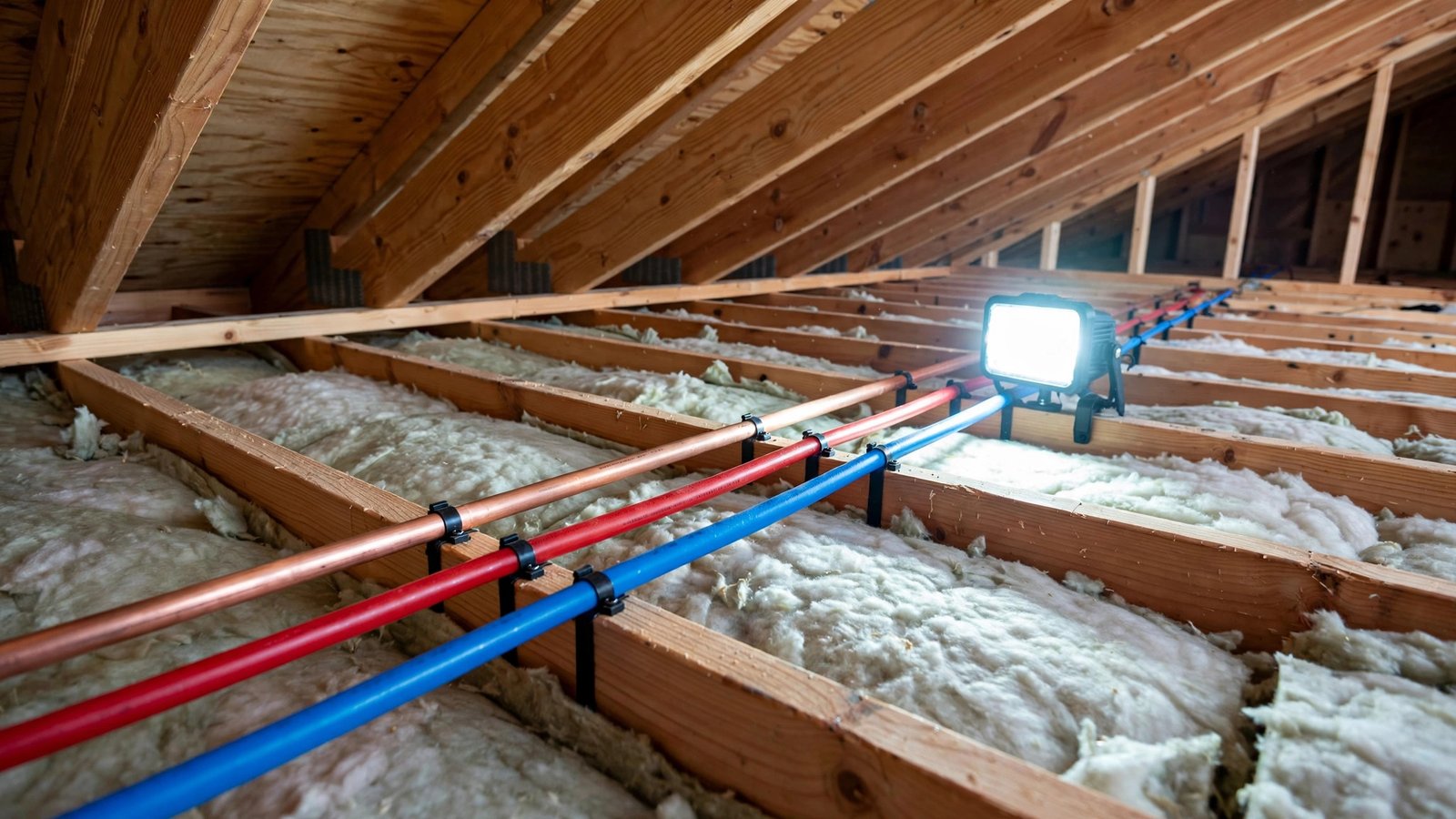
“Repair vs reroute” is not a simple winner-takes-all decision. A direct repair may make sense for one localized defect, while rerouting can be considered when a line is difficult to access or a different route better fits the property. The decision should follow the diagnosis and a clear explanation of access, disruption and long-term tradeoffs.
Slab leak repair vs reroute comparison at a glance
| Method | How it works | When considered | Typical disruption pattern |
|---|---|---|---|
| Spot repair | Repair the failed local section. | Localized defect with workable access. | Localized access and restoration. |
| Direct excavation | Open the slab/finish above the line. | When direct access is practical. | Interior floor/concrete work. |
| Tunneling | Reach from outside when feasible. | When exterior access is better than interior opening. | Exterior excavation/restoration. |
| Rerouting | Create a new path around the slab. | When the original route is difficult or repeated failure is a concern. | Varies by new route through walls, ceilings or other spaces. |
| Repiping | Replace a broader plumbing run/system. | Multiple failures or broader pipe-condition concerns. | Broader project scope. |
Questions that should drive the choice
- Where exactly is the failed line?
- What pipe material and condition are involved?
- How many leaks are present?
- Is interior access acceptable?
- Would a new route create fewer future access problems?
- What restoration will each method require?
Why “no broken concrete” does not always mean “no disruption”
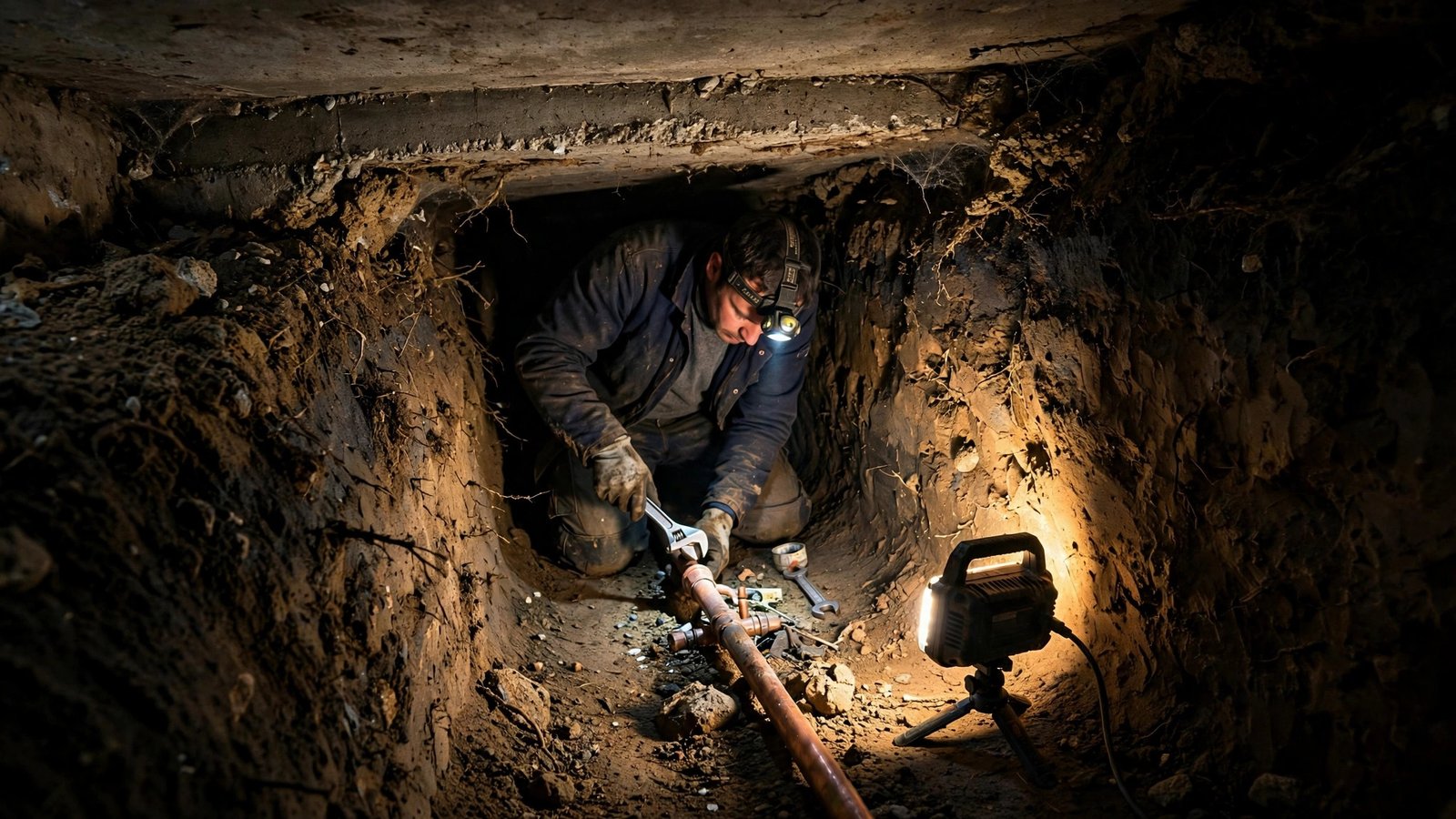
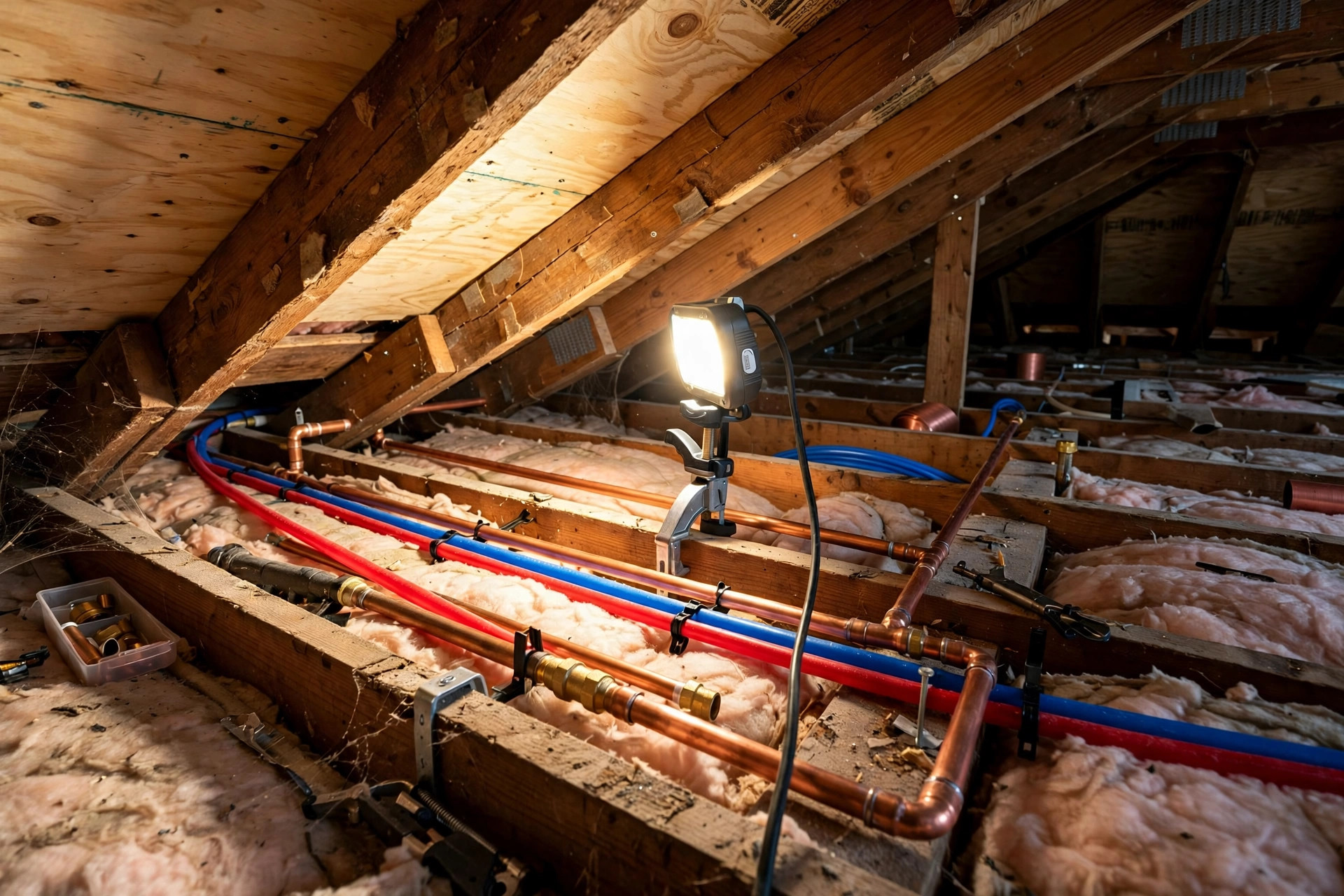
Rerouting can reduce slab access, but the new path may still require work in walls, ceilings, attics or other finished spaces. Tunneling can preserve interior flooring in some cases while creating a meaningful exterior excavation.
What leads to the repair-or-reroute decision
The decision usually arrives after the diagnosis, not before it. A single pinhole in an accessible copper line barely raises the question; the spot repair is the obvious answer. The question gets real when the picture is messier: repeated failures on the same line, a leak buried under finished interiors, or pipe that shows its age everywhere it gets exposed.
Access constraints often tip the balance. A line under a new addition, a concrete patio, or wall-to-wall custom tile can make the "simple" repair the most destructive option in the house. At that point the comparison is not repair versus reroute in the abstract, but the true total scope of each path for this specific property. The detection guide explains how the underlying facts get established first.
Problems this comparison solves
Homeowners get stuck here because each option sounds best in isolation. A structured comparison fixes that:
- Choosing a spot repair for a line that will likely fail again a few feet away.
- Choosing a reroute for a single isolated defect that a small repair would have solved.
- Underestimating restoration: the plumbing fix is only part of each option's true scope.
- Comparing bids that propose different methods as if they were the same job.
- Deciding under pressure without a clear picture of disruption, timeline, and follow-on risk.
- Paying for access work twice because the first method did not match the real problem.
How the comparison is actually made
Start with the facts: where the line runs, what material and condition it is in, and how many failures exist. Then price each realistic method as a complete project, including detection already done, access work, the plumbing itself, testing, and restoration. A spot repair quote that excludes floor replacement cannot be fairly compared to a reroute quote that includes drywall patching; the scopes must match before the numbers mean anything.
Next weigh the non-price factors: how much of the home is disrupted, how the timeline affects daily life, and what happens if the chosen method reveals a second problem. The right answer is the one with the best total outcome for the property, not the lowest plumbing-only number. Get each option described in writing so the comparison is apples to apples. The cost guide breaks down the variables behind those numbers.
What affects the approach
Line condition is the heaviest factor. An isolated defect in sound pipe favors repair; widespread deterioration favors rerouting or broader replacement. Access geometry comes next: the cost of reaching the line, whether through the slab, from outside, or via a new route, often decides the matter before anything else is weighed. The Little Elm service area lists the neighborhoods covered.
The home's finishes and layout shape the restoration half of each option. So does the homeowner's time horizon: someone planning to stay for decades may value a reroute's long-term simplicity differently from someone selling next year. None of these factors has a universal weight, which is why the decision follows a property-specific assessment rather than a rule of thumb. Related methods are detailed on the tunneling and rerouting pages.
Frequently asked questions
Is rerouting always better than repairing the leak?
No. The best approach depends on diagnosis, plumbing layout, access, pipe condition and restoration priorities.
Does tunneling avoid indoor demolition?
It can reduce or avoid interior slab access in some properties, but exterior excavation and restoration are still required.
When is repiping considered?
Repiping may be evaluated when there are multiple failures, widespread pipe deterioration or a layout where repeated spot repairs are unlikely to be practical.
Does rerouting cost more?
It can. Rerouting adds materials, new routing and access to the new path. The proper comparison depends on the property.
Can you decide the method before locating the leak?
A final repair plan should normally follow enough diagnostic work to understand the suspected leak and line configuration.
Can I do a spot repair now and reroute later?
Yes, and sometimes that is the pragmatic sequence: stop the active leak now, plan the reroute deliberately. Just be honest with yourself that the reroute is still likely, so the spot repair does not become the third patch on a failing line.
Will the abandoned under-slab line cause problems later?
An abandoned line is capped at both ends and left in place; it no longer carries water, so it cannot leak. Ask for the abandonment to be documented in the job records.
Is tunneling a middle option between repair and reroute?
It can be. Tunneling keeps the original line in service while avoiding interior slab demolition, which suits leaks under finished floors where the pipe itself is otherwise sound.
How do I compare two bids that propose different methods?
Ask each bidder for the complete scope in writing: detection status, access work, plumbing, testing, and restoration. Only complete scopes can be compared fairly; method names alone are not quotes.