
Under-slab water leak repair addresses plumbing beneath a floor or foundation area. A sound process begins by confirming the likely source and choosing an access strategy that fits the property rather than defaulting to one method.
Repair workflow
- Review symptoms and meter behavior.
- Test or investigate the suspected plumbing section.
- Narrow the leak location before access work.
- Compare direct access, tunneling or rerouting where practical.
- Repair, test and document the work.
- Restore the access area according to the agreed scope.
What changes the plan?
Pipe material, depth, line routing, finished flooring, exterior access, landscaping and the number of suspected failures can all affect the scope.
What causes under-slab water leaks
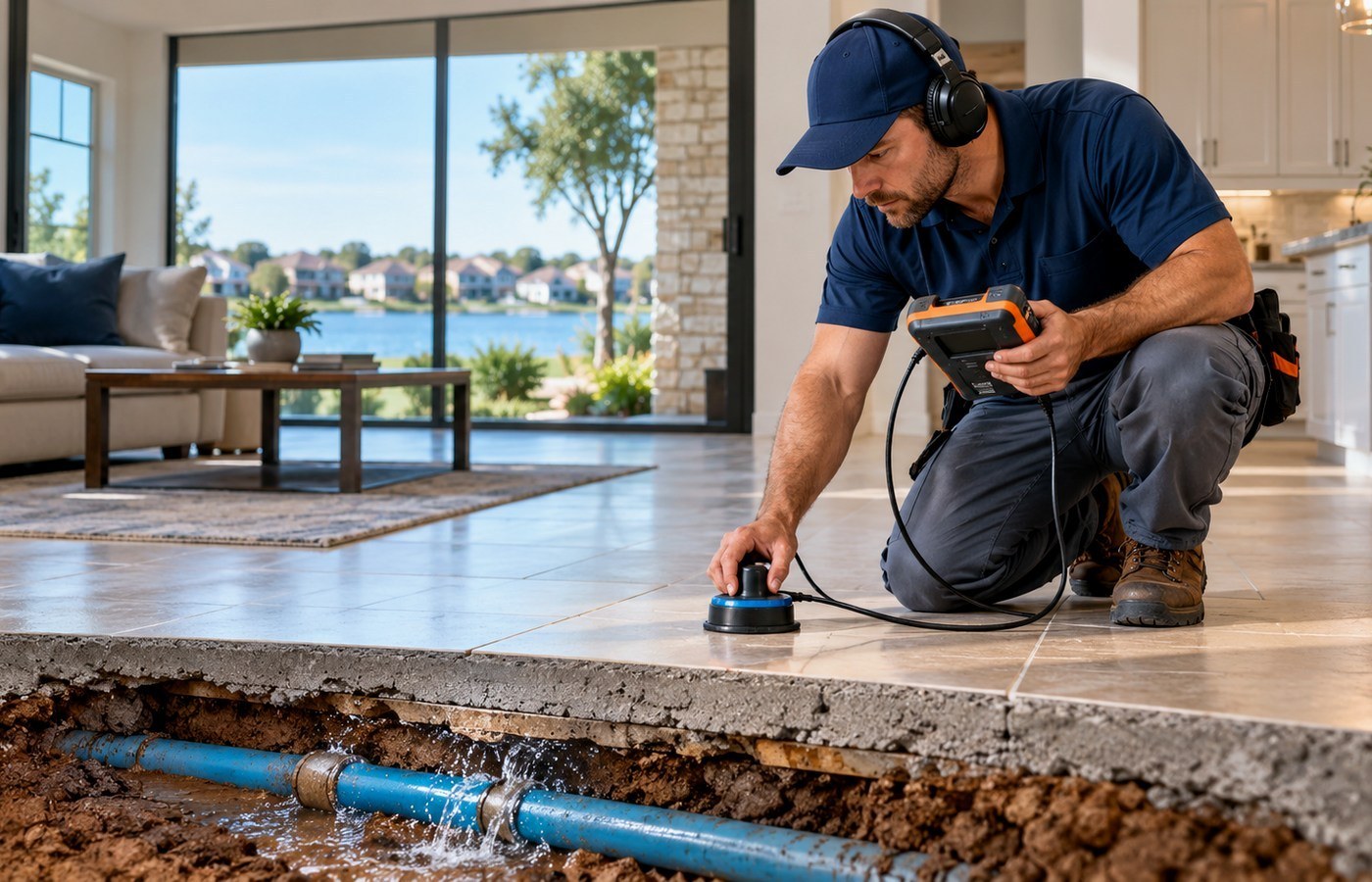
Most under-slab leaks trace back to the pipe, the soil, or the installation. Corrosion is the slow, common culprit: water chemistry, age, and dissimilar metals can thin pipe walls until a pinhole or split opens. In North Texas, expansive clay soils add a mechanical factor, swelling when wet and shrinking when dry, which can stress buried lines through many seasonal cycles of movement.
Installation defects show up as earlier failures: a pipe resting on a sharp rock, a poorly made joint, or a line rubbing against concrete or rebar can fail long before its expected life. High water pressure accelerates wear everywhere in the system. Because the pipe is hidden under concrete, these causes usually stay invisible until symptoms appear, which is why the investigation phase matters so much. Learn what that investigation involves on the detection page.
Problems under-slab repair solves
A leak beneath the foundation is different from a visible plumbing leak because everything about it is hidden. Repair addresses the full chain of problems:
- Continuous water loss you cannot see, which keeps the meter running around the clock.
- Moisture spreading under flooring and into wall bases, damaging finishes from below.
- Damp, musty indoor conditions with no obvious visible plumbing source.
- Water collecting near or under the foundation area, which deserves prompt attention.
- Rising water bills traced to water escaping where no fixture is running.
- The uncertainty itself: not knowing where the water is going or how long it has been leaking.
How under-slab repair works
The work follows a deliberate sequence: review the symptoms and meter behavior, test the suspected plumbing section, and narrow the leak location before any concrete is touched. This order matters because the access method depends on what the diagnosis finds. A single pinhole near the slab edge suggests a different plan than three failures under the center of the home, and committing to an access method before the location is known is how projects go wrong.
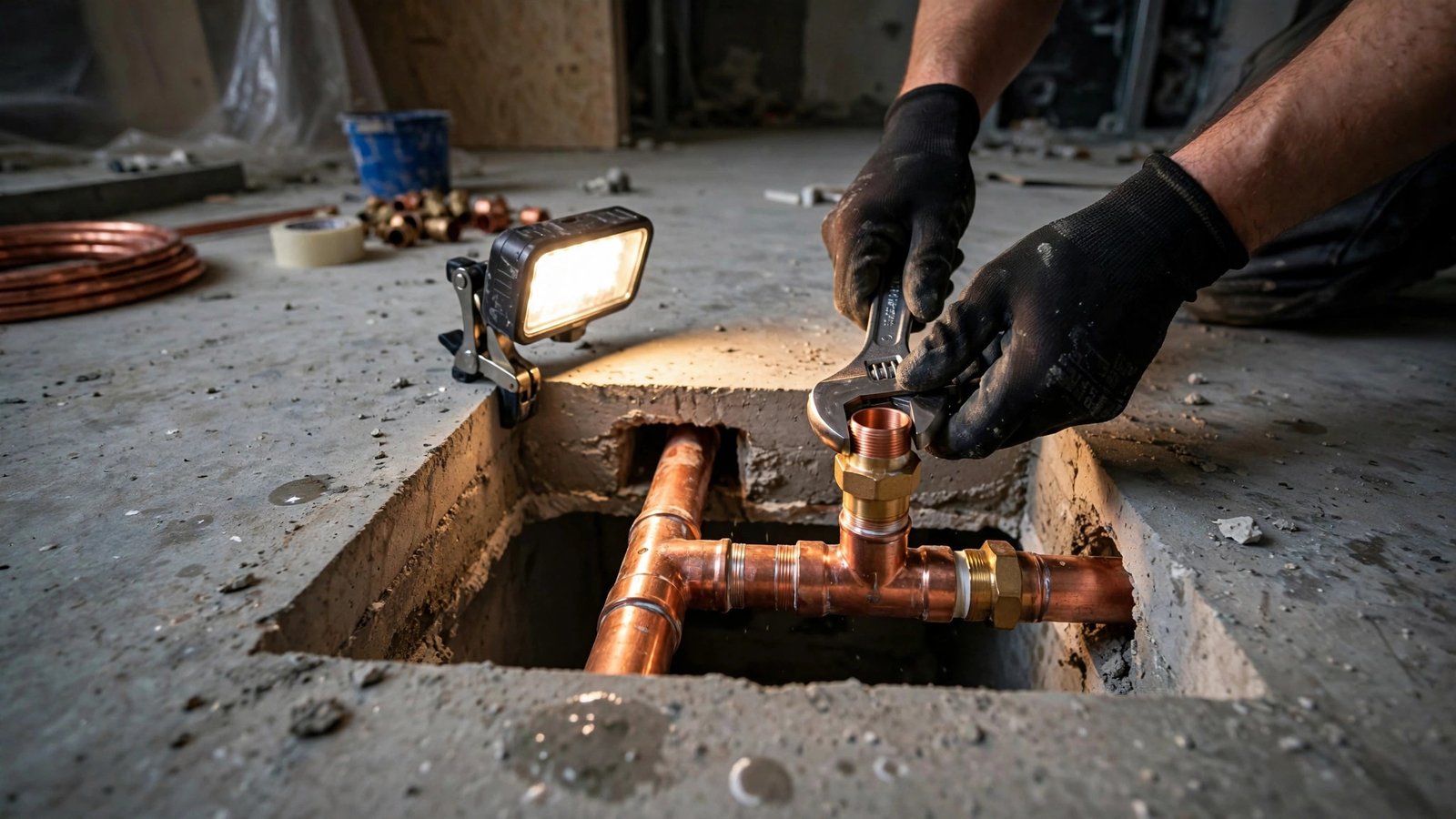
With a location in hand, the access strategy is chosen: direct opening from above, tunneling from outside, or rerouting around the problem section. The repair is made, the line is pressure-tested, and the results are documented so there is a record of what was found and fixed. Restoration closes the job: concrete patching, flooring, and finish work according to the agreed scope. Each access option is compared on the repair versus reroute page.
What affects the approach
Pipe material, depth, and routing set the baseline. Copper, PEX, and older materials each suggest different repair details, and a deep line costs more to reach than a shallow one. The number of suspected failures is a major fork in the road: one leak favors a targeted fix, while several push toward rerouting or broader replacement instead of repeated openings.
Finished surfaces drive the restoration side. Tile, hardwood, and carpet each carry different replacement realities, and matching existing flooring can be harder than the plumbing itself. Exterior access, landscaping, and buried utilities decide whether tunneling is even on the table. A complete plan names the detection findings, the chosen access method, the testing step, and the restoration scope so nothing important is left to assumption. How those variables affect quotes is covered in the cost guide.
What to mention when you call
Start with the timeline: when you first noticed something wrong, what the symptom was, and whether it has changed since. Describe any meter observations, such as the meter moving with all fixtures off, and whether you have recent water bills showing unusual usage. These details help distinguish a pressurized leak from drainage or appliance issues.
Mention what you know about the home: its approximate age, the flooring in the affected area, and whether any plumbing work has been done before. If another professional already investigated, share their findings, even if they were inconclusive, so the work does not start from zero. Note whether water is currently active and whether you know where the main shutoff is, since that affects how urgently the first visit is scheduled.
If you rent the property or manage it for someone else, say so, because authorization for access work and restoration decisions may involve the owner. A few clear facts at the start save back-and-forth later and help the visit focus on investigation instead of paperwork.
Frequently asked questions
Can pinhole leaks happen more than once?
Yes. Multiple failures can justify broader pipe-condition evaluation.
Does tunneling avoid all interior work?
Not necessarily. It may reduce slab access, but other access or restoration may still be required.
Is rerouting always the best option?
No. The appropriate method depends on diagnosis, access, line condition and the property's needs.
How do I know the leak is actually under the slab?
You usually cannot know from symptoms alone. Meter behavior, pressure testing, and acoustic or thermal investigation build the case for an under-slab source and rule out visible plumbing, appliances, and drainage first.
Can an under-slab leak be repaired without opening the floor inside?
Sometimes. Tunneling from outside or rerouting around the slab can avoid interior openings, but feasibility depends on the line location, soil, and property layout. A site assessment decides which options are realistic.
Will my flooring have to be replaced?
It depends on the access method and how much flooring is disturbed. Direct interior access affects the floor above the repair; tunneling and rerouting are chosen partly to reduce that impact. Ask what restoration is included in the scope.
What if there is more than one leak?
Multiple failures change the plan from a spot repair toward rerouting or broader replacement. Finding every failure before choosing the method avoids paying for access work twice.