
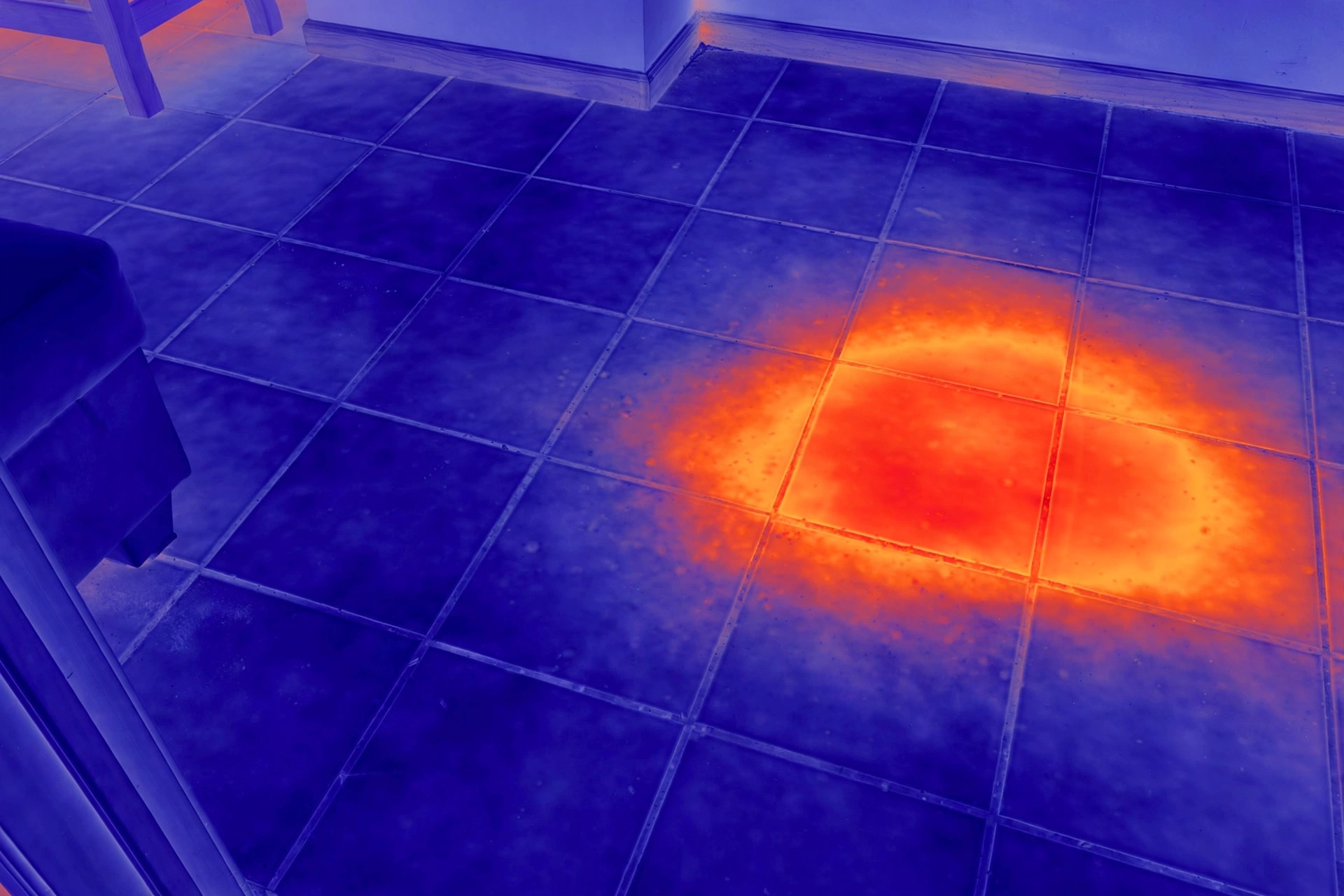
Slab leak signs in Little Elm, TX include warm floors, water sounds and other clues. No single symptom proves a slab leak, but several clues together can justify a closer look.
Common clues
- Unexpected water-bill increase.
- Running-water sounds with fixtures off.
- Warm or damp floor areas.
- Unusual pressure changes.
- Persistent moisture.
Why diagnosis matters
A warm floor or high bill can have other causes. Good diagnosis starts by ruling out simpler sources before structural access work.
Warm spots on the floor
A patch of floor that feels warm, often on tile or wood near a bathroom, kitchen or laundry area, is one of the better-known slab leak clues. It usually points to a hot-water line leaking under the slab, warming the concrete and the flooring above it. The warmth may be constant or come and go with hot water use.
Warm floors have other explanations too, including radiant heating systems and sun exposure, so the sign is suggestive rather than conclusive. When the warm spot sits over the known path of a hot-water line, suspicion rises and detection is the next step.
Water sounds when nothing is running
Hearing water move through pipes or under the floor when every fixture is off is another classic sign. Homeowners describe it as hissing, rushing or a faint gurgle. The sound may be clearest at night when the house is quiet, and it often seems to come from a particular wall or floor area.
A quick check helps: shut off the main water valve and listen again. If the sound stops, the water was coming from the house plumbing, which strengthens the case for a hidden leak. Note where the sound was loudest, since that helps the investigation.
Other clues worth noticing
Damp spots, buckling flooring or unexplained moisture at the base of walls can accompany an under-slab leak, though they can also come from spills, appliance leaks or exterior water. A water bill that climbs without a change in usage is a strong supporting clue. Musty odors near the slab edge, a drop in water pressure, and a water heater that runs more than usual can round out the picture.
Foundation-related signs such as new cracks or sticking doors sometimes appear in the same homes, but in North Texas clay soils those can have separate causes. Treat each clue as one data point, not a verdict.
What the signs cannot prove alone
Every one of these signs has innocent explanations. Warm floors can come from the sun or heating. Water sounds can come from a running toilet refill or an appliance. Damp spots can come from condensation or irrigation. A single clue is a reason to look closer, not a diagnosis.
The pattern matters more than any one sign. Two or three clues pointing at the same area, for example a warm patch plus a sound plus a rising bill, make a professional investigation clearly worthwhile. That investigation, not the symptoms, is what confirms a slab leak.
What to do when slab leak signs line up in Little Elm, TX
Start with the meter test: everything off, watch the meter. If it moves, water is escaping. Shut off the main valve if water is actively damaging finishes. Write down what you noticed, where, and when it started, because a clear symptom history speeds up the professional visit.
Then arrange detection and repair planning. The technician will confirm whether the problem is under the slab and where, and the repair options can be compared for that specific location. Acting while the signs are fresh usually keeps the damage smaller.
Frequently asked questions
My floor is warm in one spot. Is it definitely a slab leak?
No. Sun exposure, heating systems and appliances can warm floors too. A warm spot over a hot-water line path, especially with other clues like sounds or a rising bill, is worth investigating with professional detection. Note whether the warmth is constant or tied to hot water use, since that detail helps the investigation.
I hear water in the wall. Slab leak or something else?
It could be either. Toilet refills, ice makers and water heaters all make water sounds. Shut off the main valve briefly: if the sound stops, the house plumbing is the source and a hidden leak is more likely. Note where the sound is loudest and whether it changes, since that helps narrow the search area.
Can a slab leak cause mold?
Prolonged moisture under flooring or in wall bases can support mold growth. Musty odors near the slab edge are a reason to investigate promptly, and any visible mold should be handled with proper precautions. Ventilate the area and avoid disturbing visible growth until it can be handled with proper precautions.
Do slab leaks always show visible water?
No. Many slab leaks never show standing water. The water can drain into the soil below or spread thinly under flooring, which is why bills, sounds and warm floors are often the first clues. This is why the meter test matters: it catches continuous flow that the eye cannot see.
How quickly should I act on these signs?
Sooner is better. An active leak can damage flooring, finishes and the area around the slab over time. Start with the meter test, document the symptoms, and arrange detection while the clues are fresh. If water is actively spreading, shut off the main valve first and document the damage with photos.
Need help after reading?
Use the phone line to discuss the symptoms at your property and the next diagnostic step.
☎ Call +1 972-945-2624