
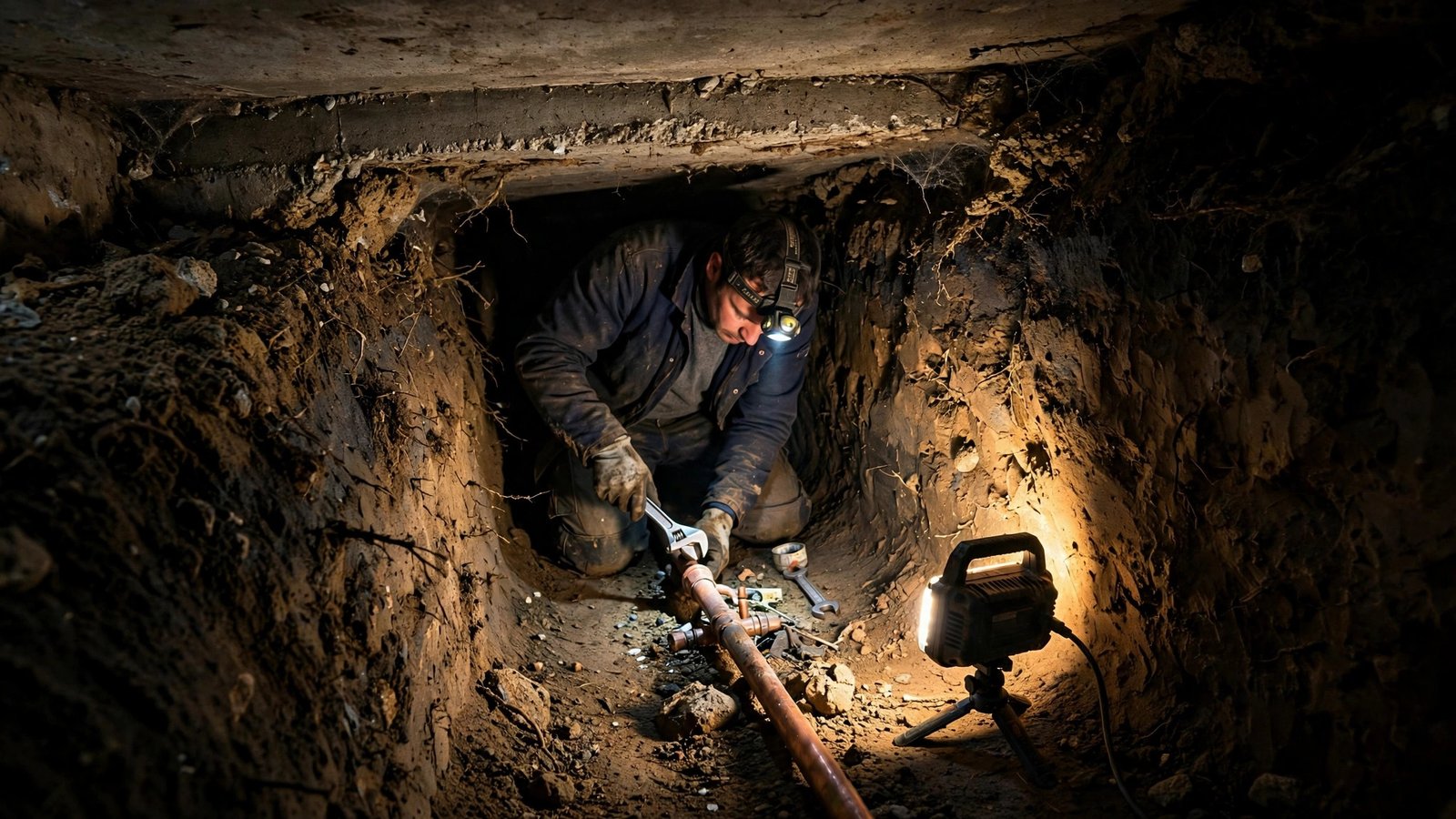
Can a slab leak be fixed without breaking concrete in Little Elm, TX? Sometimes. Tunneling may reach a line from outside, while rerouting creates a new pipe path around the original route. Both depend on property-specific conditions.
Tunneling
Tunneling can reduce interior slab access when exterior conditions permit. It still involves excavation and restoration.
Rerouting
Rerouting may reduce slab access but can require work in walls, ceilings, attics or other finished areas.
Direct repair
For a localized defect, controlled direct access may still be the most practical solution.
Compare total disruption
Look at access, restoration, cost factors and future serviceability rather than treating “no concrete” as the only objective.
What the slab leak repair question usually means in Little Elm, TX
Most homeowners asking this are really asking whether they can avoid jackhammering through their floors. The answer is often yes, but it depends on where the leak is, which line is leaking, and what the home layout allows. There are established ways to repair an under-slab leak without cutting interior concrete, and there are also situations where opening the slab is the most direct path.
The first step is always the same: confirm the leak with professional slab leak detection. The method that fits best, tunneling, rerouting or direct repair, is chosen after the leak point is known, not before.
Tunneling keeps the floors intact
With tunneling, a small tunnel is excavated from outside the slab edge to reach the leaking pipe run under the home. The repair happens underneath, so interior tile, wood or carpet does not need to be cut open. This approach suits leaks located toward the middle or edges of the slab where a tunnel can reach them safely.
Tunneling is not possible for every leak point. Very deep runs, unstable soil, or a leak under an interior room far from any slab edge can rule it out. A site visit and detection results show whether the tunnel path is practical. The tunneling process is usually planned around the specific pipe layout.
Rerouting skips the slab entirely
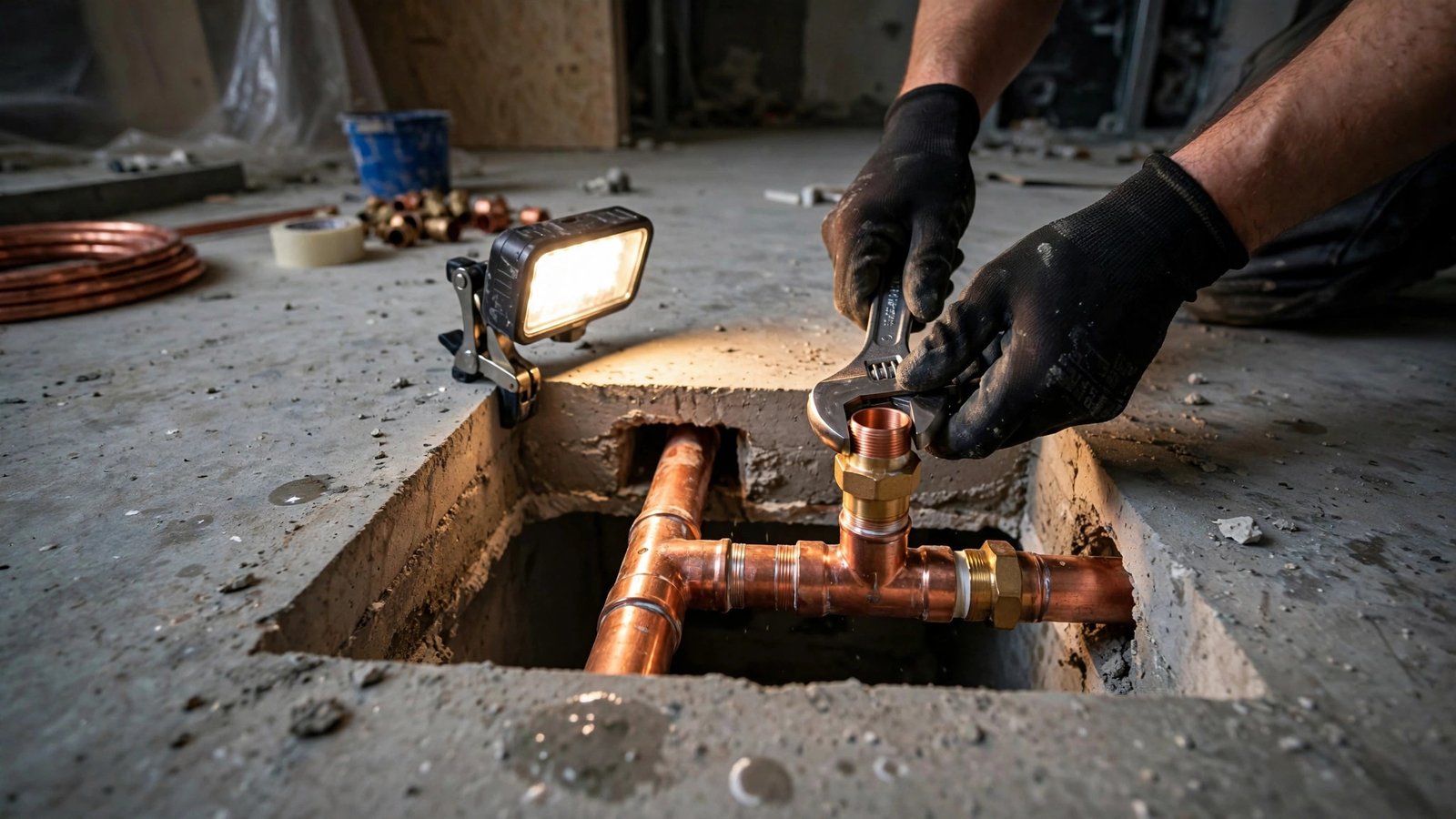
Rerouting abandons the failed under-slab section and installs a new line through walls, the attic or along the exterior, above the slab. Because the old line is left in place and no concrete is cut, interior floors stay untouched. This is a common choice when a line has leaked more than once or when the under-slab run is hard to reach.
The trade-off is work in finished spaces: drywall openings, patching and paint where the new line runs. Rerouting also changes the pipe route, which can be an advantage if the original under-slab run was the weak point.
Direct repair still has a place
When the leak point is known precisely and sits under an accessible area, opening a section of the slab for a direct repair can be the simplest option. One opening, one repair, one patch. It is often chosen for a single, clearly located leak where tunneling or rerouting would add complexity.
The cost and disruption picture includes the concrete work plus floor restoration above the opening, so matching the right flooring afterward matters. Detection accuracy is what makes this option viable.
Compare total disruption, not just concrete
Homeowners tend to focus on whether concrete gets cut, but the better comparison is total disruption: how many rooms are affected, how much finished work needs repair, and how long the home is disrupted. Tunneling disturbs the exterior and the area under the slab. Rerouting disturbs walls and ceilings. Direct repair disturbs the floor above the leak.
Ask for each option to be explained for the specific leak point in the home, including what restoration each one needs. That comparison, made after detection, is how most homeowners choose confidently.
Frequently asked questions
Can every slab leak be fixed without breaking concrete?
No. Tunneling and rerouting avoid cutting interior concrete in many cases, but leak location, soil conditions and pipe layout decide. Some leaks are best handled with a direct repair through the slab. Detection results guide the choice. The honest answer comes from detection, which shows the leak point and lets each method be judged for that spot.
Does rerouting leave the old pipe in the slab?
Yes. The failed under-slab section is abandoned in place and a new line is run above the slab. The old line is disconnected so no water flows through it anymore. Because the abandoned line carries no water, it cannot leak again, which is one reason homeowners choose this option.
Is tunneling always possible?
No. The leak point must be reachable from a slab edge through soil that can be worked safely. Deep runs, certain soil conditions and interior locations can rule it out. A site evaluation confirms whether tunneling fits. Ask for the tunnel path to be explained for the specific leak point before committing to this method.
How long does a reroute usually take?
It varies with the length of the new run and how many finished surfaces it crosses. Many reroutes are completed in a day or two, plus patching and paint afterward. The specific home layout sets the timeline. Ask what the daily schedule looks like and when water will be off, so the household can plan around the work.
Which option costs the least?
There is no universal answer, because each option has different labor and restoration costs that depend on the home. Compare written scopes for the specific leak point, including the restoration work each method requires. A cheaper repair that skips needed restoration can cost more in the end, so compare complete scopes.
Need help after reading?
Use the phone line to discuss the symptoms at your property and the next diagnostic step.
☎ Call +1 972-945-2624