
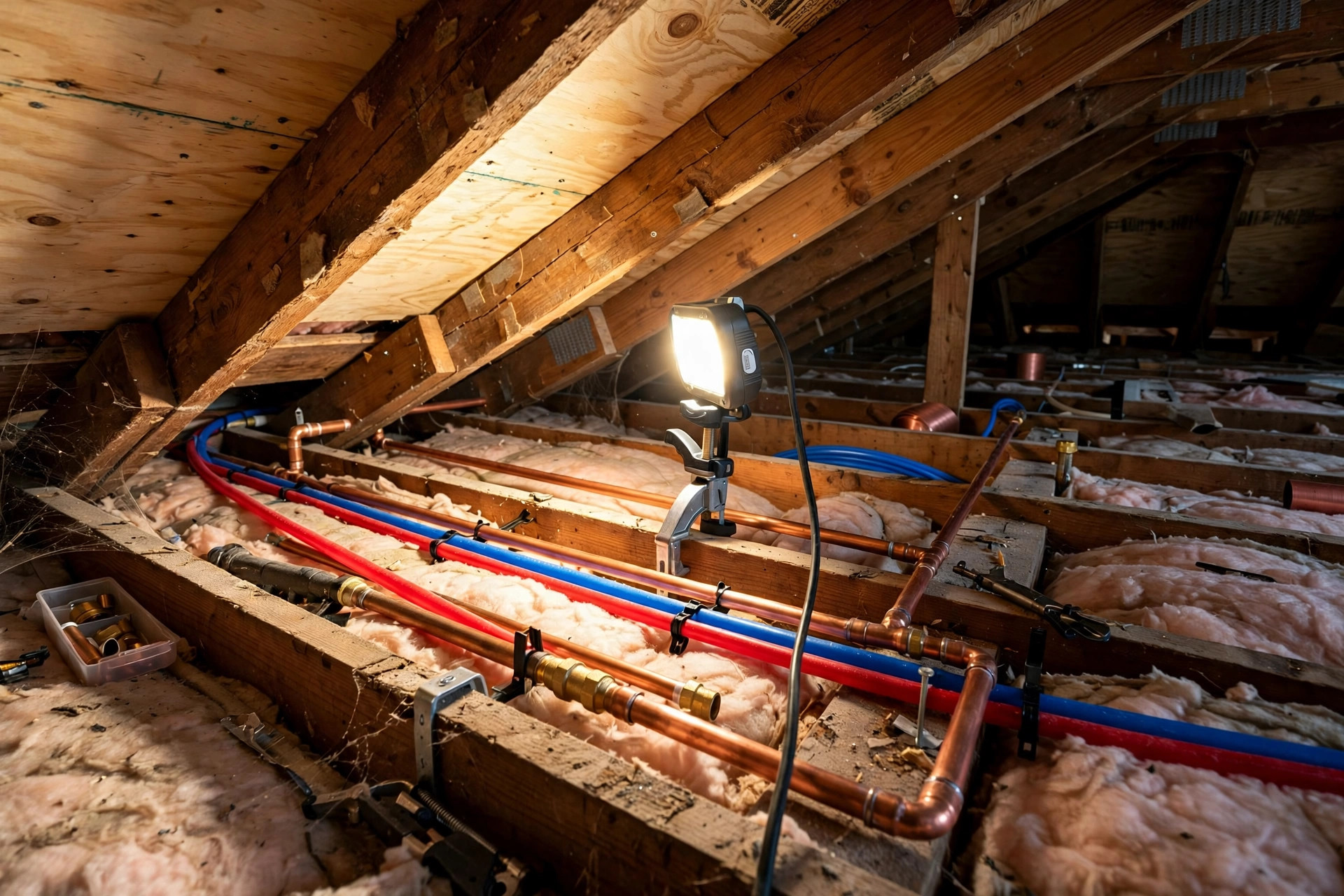
When comparing tunneling vs rerouting for a slab leak in Little Elm, TX, tunneling accesses the existing line from outside where feasible. Rerouting creates a new path that bypasses the original slab-area route.
Key comparison
| Factor | Tunneling | Rerouting |
|---|---|---|
| Existing line | Access and repair it. | Bypass it with a new path. |
| Interior slab access | May reduce it. | May reduce it. |
| Other work | Exterior excavation. | New-route finish access. |
| Decision | Depends on site access. | Depends on new route feasibility. |
What tunneling is
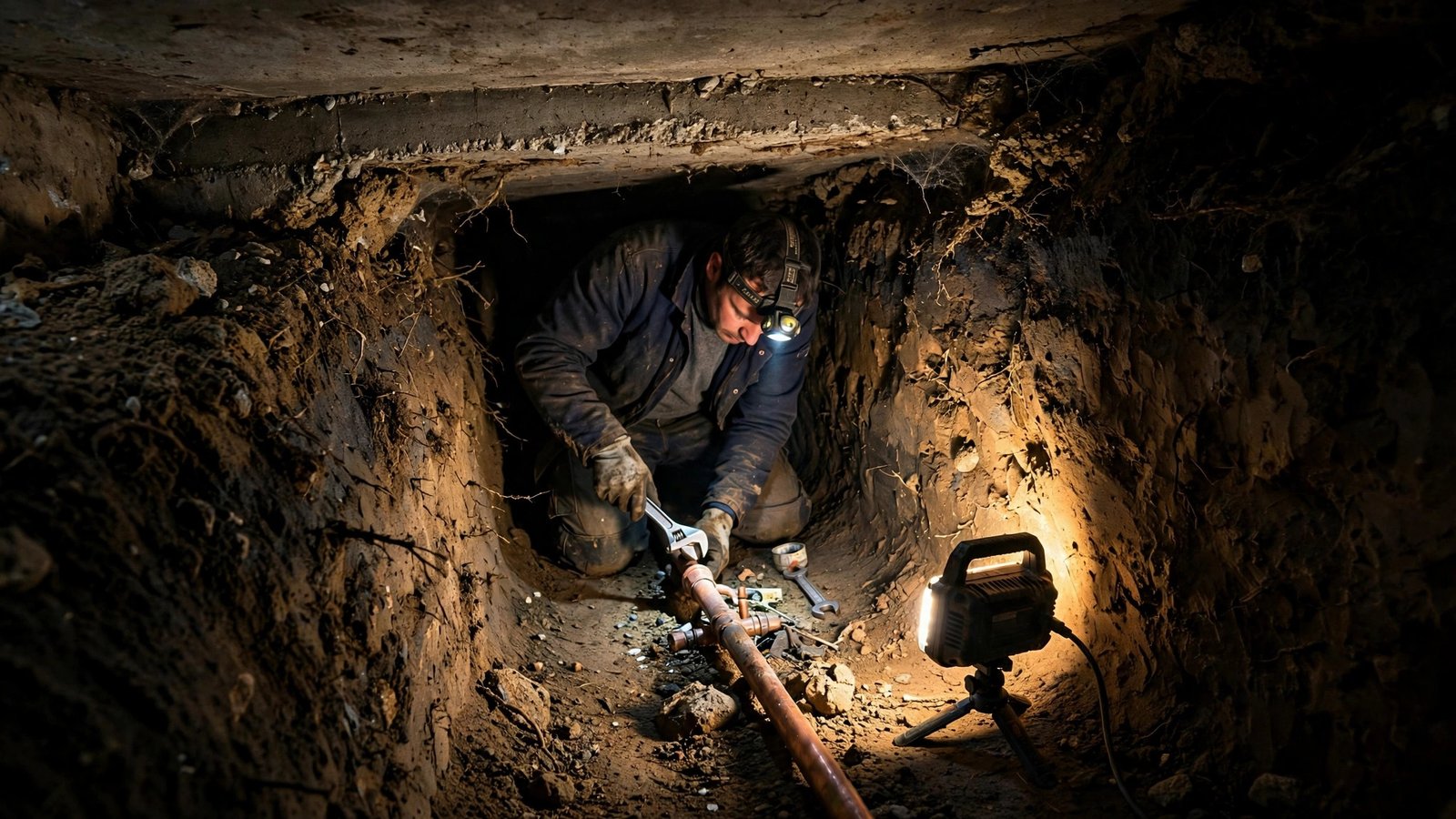
Tunneling means excavating a small tunnel from outside the slab edge to reach the leaking pipe under the home. The repair is made from below, so interior floors are not cut open. Once the pipe section is repaired or replaced, the tunnel is backfilled. It is a well-established method when the leak point is reachable from a slab edge and the soil can be worked safely.
The tunneling approach keeps the disruption outside the living space, which appeals to homeowners with expensive or hard-to-match flooring. The trade-off is excavation work around the foundation and a longer on-site process than a simple opening.
What rerouting is
Rerouting abandons the failed under-slab section entirely and installs a new water line through walls, the attic or along the exterior, above the slab. The old line is disconnected and left in place. Because no concrete is cut, interior floors stay untouched, and the leak-prone under-slab run is removed from service for good.
Rerouting is often chosen when a line has leaked more than once or when the under-slab path is difficult to reach. The work shifts from concrete to finished spaces: drywall openings, patching and paint along the new route.
Comparing disruption
Tunneling disrupts the exterior: excavation near the foundation, soil handling and backfill. The interior stays largely as it was, apart from the detection markings. Rerouting disrupts the interior: openings in walls or ceilings wherever the new line runs, followed by patching, texture and paint.
For homes with tile or hardwood that would be hard to match after a slab opening, both options avoid that problem. The question becomes whether the homeowner prefers exterior excavation or interior patchwork, and how the pipe layout affects each path.
Comparing cost factors
No honest article can quote a universal price, because the numbers depend on the leak location, the length of the run, soil conditions, flooring and the home layout. What can be compared are the cost drivers. Tunneling costs center on excavation labor, shoring, and the under-slab repair itself. Rerouting costs center on the new pipe run plus drywall, paint and finish restoration.
The cost questions worth asking for both methods are the same: what is included in the scope, what restoration is covered, and what happens if the plan changes mid-job. Written scopes make the comparison real.
When tunneling or rerouting clearly fits better in Little Elm, TX
Tunneling tends to fit when the leak point is well located, reachable from a slab edge, and the rest of the line is in reasonable shape. Rerouting tends to fit when the line has a history of leaks, when the under-slab run is long or inaccessible, or when the homeowner wants the old under-slab line out of service permanently.
Soil conditions, the depth of the pipe and interior layout can each push the decision one way or the other. This is why the comparison is made after detection, for the specific leak point, rather than as a general rule.
How the final choice is made
The practical process is straightforward: detect and locate the leak, then get a clear explanation of how each method would work at that spot, including the disruption and the restoration each one needs. Ask what could change the plan once work begins, and what the fallback is.
Homeowners who compare written scopes for their specific situation, rather than choosing a method in the abstract, tend to be the most satisfied. The right answer is the one that fits the leak point, the home and the budget together.
Frequently asked questions
Which lasts longer, a tunneling repair or a reroute?
Both can be durable when done properly. A reroute has an edge in one respect: the leak-prone under-slab run is abandoned entirely, so that section cannot leak again. A tunneling repair fixes the failed spot while the rest of the line stays in service.
Does tunneling work for every leak location?
No. The leak must be reachable from a slab edge through workable soil. Interior locations far from any edge, very deep runs or unstable soil can rule it out. Detection and a site evaluation confirm whether tunneling is practical. A site evaluation after detection confirms whether the tunnel path is practical for the home.
Will rerouting change my water pressure?
A properly sized new line should deliver normal pressure. Longer runs and added fittings can introduce small losses, which is why the new line should be sized and routed correctly for the home. Mention any existing pressure concerns during planning, so the new run is designed with them in mind.
Can I stay in the home during the work?
Often yes, with brief water shutoffs during the work. Tunneling keeps the mess outside; rerouting involves interior work in the affected areas. Ask about the daily schedule and water availability before work starts. Plan for brief water shutoffs and some noise, and confirm the schedule before work begins.
Do I need detection before choosing?
Yes. The choice between tunneling and rerouting depends on the leak point, which line is involved and the pipe layout. Choosing a method before the leak is located risks planning around the wrong spot. A method chosen without a confirmed leak point risks solving the wrong problem in the wrong place.
Need help after reading?
Use the phone line to discuss the symptoms at your property and the next diagnostic step.
☎ Call +1 972-945-2624